Introduction
A clean home does not have to come with a cabinet full of harsh-smelling cleaners, disposable wipes, and single-use supplies.
The way you clean matters just as much as how often you clean. From the products you keep under the sink to the cloths you use and the way you store cleaning supplies, small choices can shape your household’s overall waste.
Choosing eco-friendly home cleaning products is one practical way to create a more thoughtful cleaning routine. Instead of replacing everything at once, you can focus on products that are useful, durable, and appropriate for the cleaning jobs you actually do.
This guide focuses on building a practical, eco-conscious home cleaning system. It covers product categories, reusable tools, room-by-room applications, storage, safety, and everyday habits.
Table of Contents
What Makes a Home Cleaning Routine More Eco-Friendly?
An eco-friendly cleaning routine is not simply about buying products labeled “green.”
A more sustainable approach considers the product, packaging, tools, frequency of use, durability, and amount of waste created.
For example, a practical routine may combine:
- Concentrated or long-lasting cleaners
- Reusable spray bottles
- Washable cleaning cloths
- Durable brushes
- Refillable containers
- Appropriate product quantities
- Responsible packaging disposal
- Fewer unnecessary cleaning products
The objective is to clean effectively while avoiding unnecessary waste.
Think Beyond the Bottle
It is easy to focus on the bottle sitting on the shelf, but the entire cleaning system matters.
A cleaner that works well but requires excessive packaging may not be the most practical choice for your goals. Similarly, reusable tools only work when you wash and reuse them consistently.
This is why eco-friendly household cleaning products work best as part of a broader routine rather than as isolated purchases.
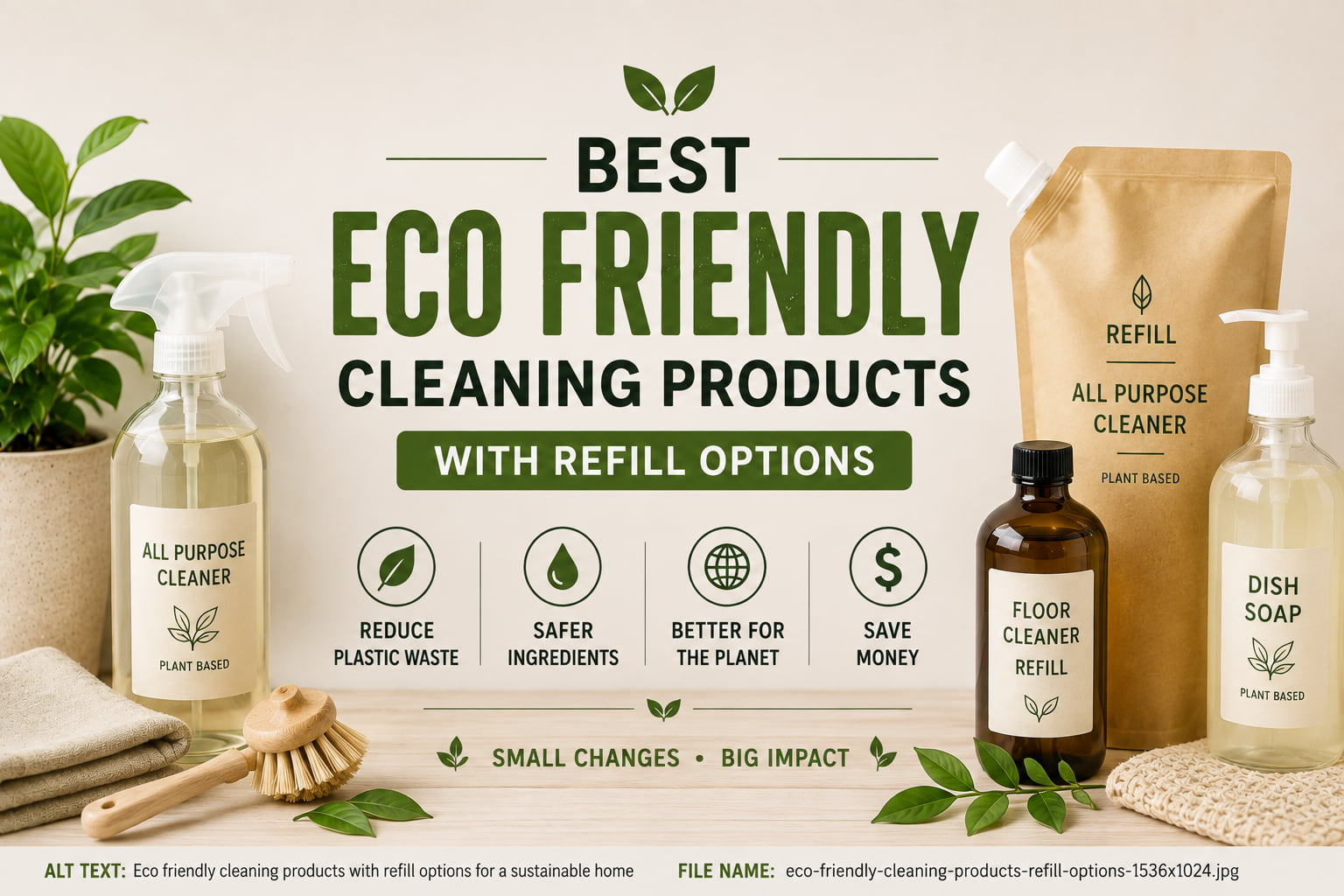
If you want to explore refillable cleaners in more detail, see our guide to eco-friendly cleaning products.
Start With What You Already Have
You do not need to throw away usable cleaning products simply because you want a greener home.
Using products you already own before replacing them can prevent unnecessary waste.
When something runs out or needs replacing, that is a better opportunity to consider a lower-waste alternative.
Essential Eco-Friendly Home Cleaning Products
You do not need a different cleaner for every surface in your home.
A smaller collection of versatile products can make cleaning easier while reducing clutter and unnecessary purchases.
1. Multi-Surface Cleaner
A suitable multi-surface cleaner can handle many everyday jobs. Always follow the manufacturer’s instructions.
It may be useful for:
- Sealed countertops
- Tables
- Shelves
- Appliance exteriors
- Other compatible hard surfaces
Always check whether the product is appropriate for the specific material.
When comparing cleaning products, you can also look for the EPA’s Safer Choice label, which helps identify products that meet specific criteria for safer ingredients and performance.
2. Dishwashing Product
Dishwashing products are used frequently, making them an important part of a household’s cleaning routine.
When choosing among eco-friendly home cleaning products, consider packaging, concentration, product longevity, and whether the formula suits your actual dishwashing needs.
3. Bathroom Cleaner
Bathrooms often need products designed for soap residue, mineral deposits, or general surface cleaning.
Instead of collecting several overlapping products, identify the specific cleaning jobs you regularly perform.
4. Glass and Mirror Cleaner
A dedicated glass cleaner can be useful if you have many mirrors or glass surfaces.
However, avoid purchasing one simply because it is marketed as a separate “must-have” product if another suitable cleaner already performs the job.
5. Laundry Products
Laundry is another area where packaging and product consumption can add up over time.
Concentrated formulas, appropriate dosing, and products designed for the washing you actually do can help reduce unnecessary consumption.
Choose Cleaning Products by Task
A useful way to organize eco-friendly home cleaning products is by cleaning task instead of by brand.
This helps prevent your cleaning cabinet from becoming overcrowded.
Everyday Surface Cleaning
For routine dust, fingerprints, and light surface dirt, a suitable general-purpose cleaner and reusable cloth may be enough.
There is often no need to use a heavy-duty product for a light cleaning job.
Grease and Kitchen Messes
Kitchen surfaces may require more targeted cleaning because cooking can leave behind grease and food residue.
Use a product specifically designed for the surface and type of mess rather than automatically using the strongest cleaner available.
Bathroom Maintenance
Regular maintenance can reduce the need for aggressive cleaning later.
Regularly wiping suitable surfaces can help prevent buildup and keep cleaning tasks manageable.
Floors
Choose a floor-cleaning product based on your flooring material.
Wood, tile, stone, laminate, and other surfaces can have different care requirements, so always follow the manufacturer’s recommendations.
Eco-Friendly Cleaning Tools That Reduce Waste
Products are only one part of a greener cleaning routine.
The tools you use repeatedly can also affect how much waste your household creates.
Reusable Cleaning Cloths
Washable cloths can replace many disposable paper towels and wipes.
Look for cloths that are durable enough to survive repeated washing.
Keep separate cloths for different cleaning jobs if that makes your routine easier to manage.
Durable Scrub Brushes
A sturdy brush can be useful for bathrooms, kitchens, floors, and other tougher cleaning tasks.
Choose a design that is comfortable to use and easy to clean.
Reusable Spray Bottles
A durable spray bottle can support a lower-waste routine, particularly when used with suitable concentrated or refillable products.
Label containers clearly when necessary, especially if different products are stored in similar bottles.
Washable Mop Pads
If your mop system supports washable pads, they can reduce the need for disposable replacements.
The most sustainable tool is generally one you will actually maintain and keep using.
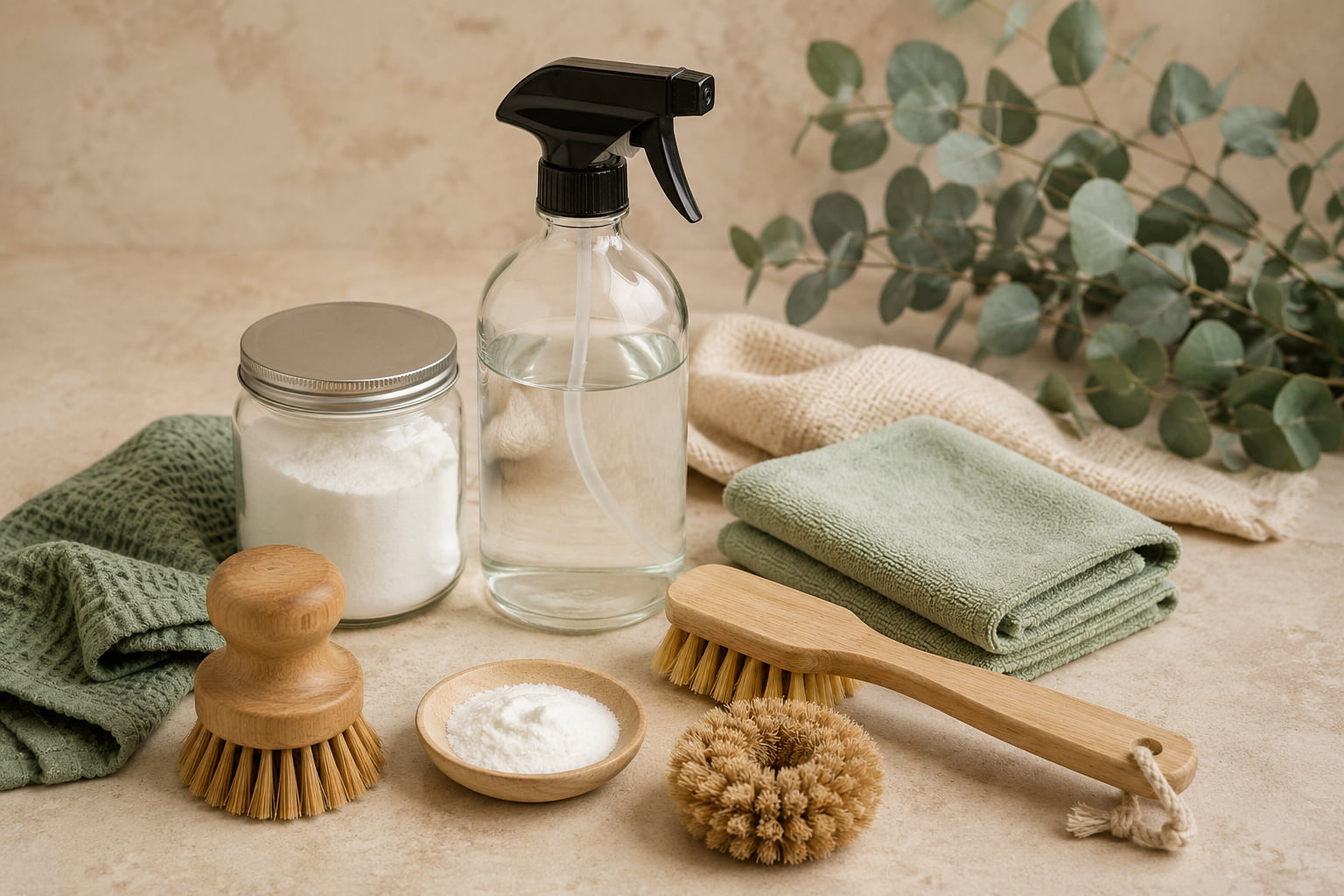
Choosing eco-friendly home cleaning products is only one part of a lower-waste cleaning routine; reusable tools help reduce everyday disposable waste too.
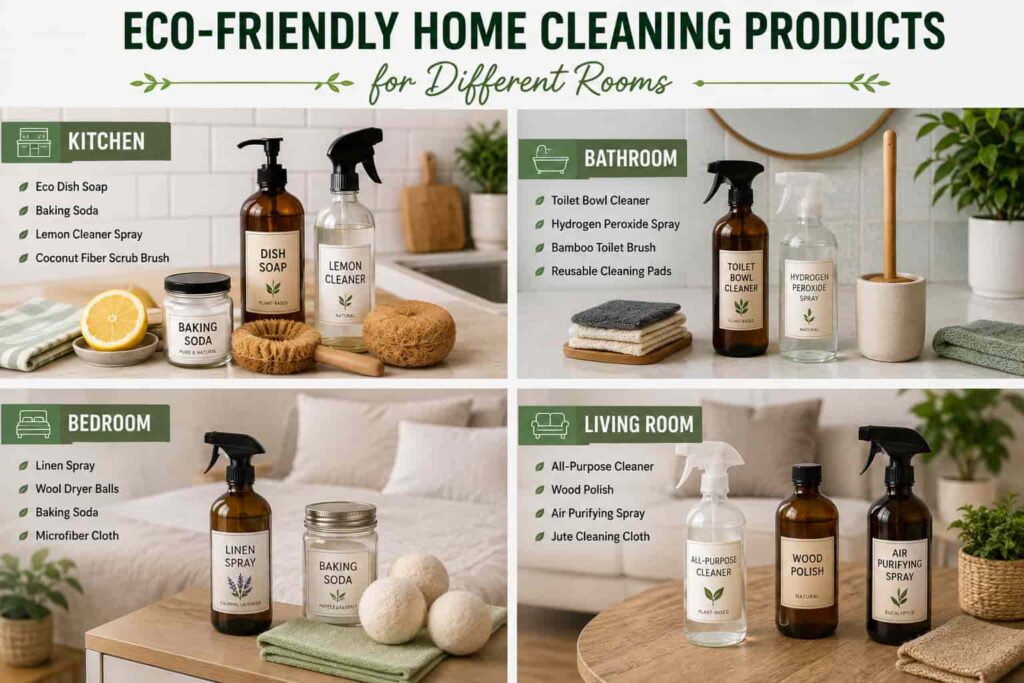
Eco-Friendly Home Cleaning Products for Different Rooms
Different areas of your home have different cleaning needs.
Instead of buying every product you see, build a simple system around eco-friendly home cleaning products and the rooms you actually clean.
Kitchen
The kitchen usually needs solutions for:
- Countertops
- Sinks
- Appliances
- Dishes
- Grease
- Food residue
- Floors
A small number of suitable products can cover many of these tasks.
Pair them with reusable cloths and durable brushes to reduce single-use cleaning supplies.
Bathroom
Bathroom cleaning often involves sinks, toilets, showers, tubs, mirrors, and floors.
Create a routine that combines regular maintenance with deeper cleaning when necessary.
Keeping the bathroom consistently maintained can make individual cleaning sessions easier.
Bedroom
Bedrooms generally require less specialized cleaning.
Focus on dusting surfaces, cleaning floors, washing textiles, and keeping frequently touched areas clean.
A reusable cloth and a surface cleaner may handle much of the routine.
Living Room
For living areas, concentrate on dust, fingerprints, floors, furniture surfaces, and frequently touched objects.
Avoid using products on furniture or finishes unless they are specifically suitable for those materials.
How to Build a Simple Home Cleaning System
The best eco-friendly home cleaning products are easier to manage with a clear system.
Step 1: List Your Regular Cleaning Jobs
Write down what you clean every week or month.
For example:
- Kitchen surfaces
- Bathroom surfaces
- Floors
- Mirrors
- Dusting
- Laundry
- Dishes
This immediately shows which products you actually need.
Step 2: Match Products to Tasks
Look at your current cleaning cabinet.
Identify products that perform similar jobs and decide which ones you genuinely use.
Step 3: Introduce Reusable Tools
Replace frequently discarded supplies with washable or durable alternatives when practical.
You do not need to replace everything simultaneously.
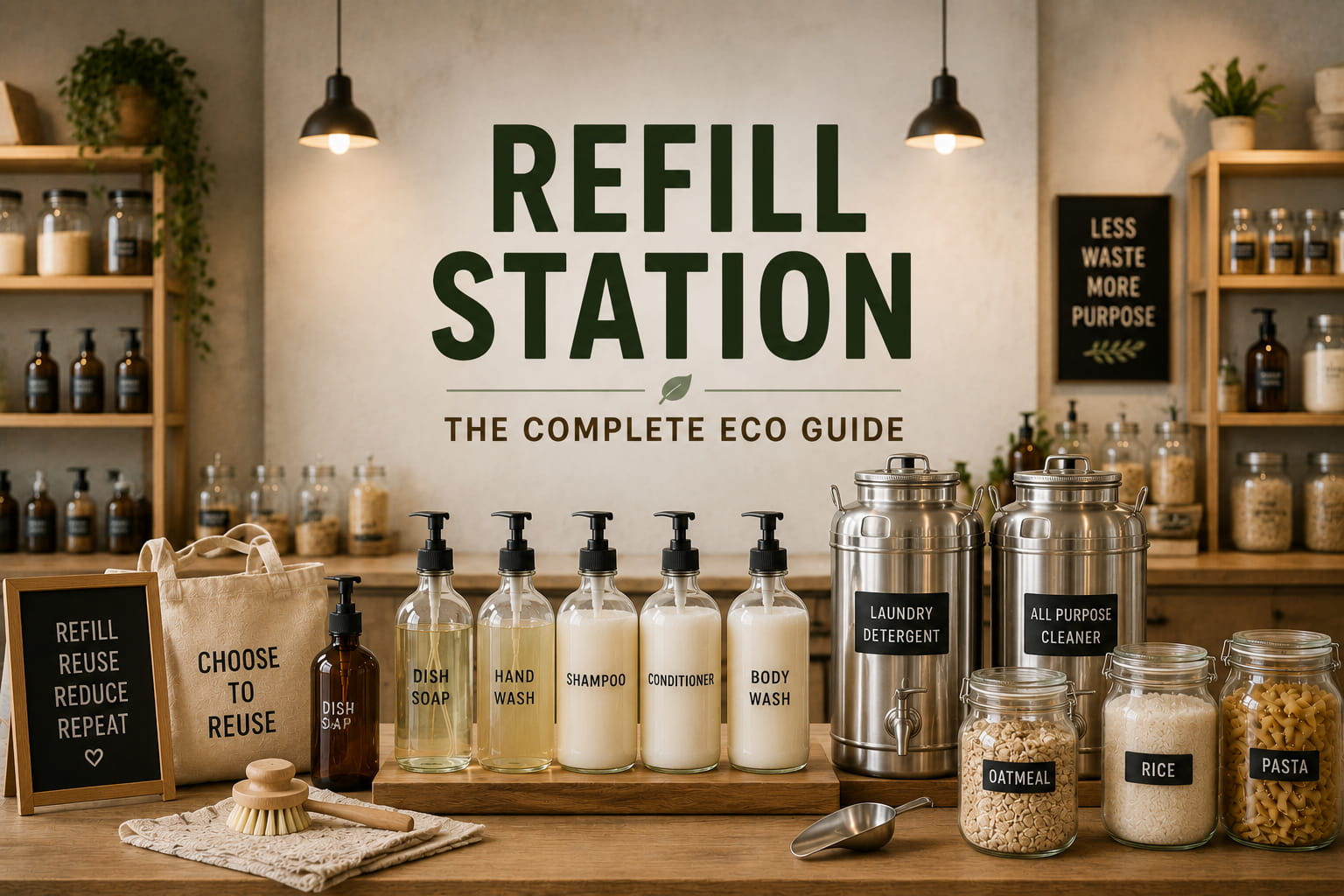
If you are interested in reducing packaging through refill shopping, our complete refill station guide explains how refill stations work and what types are available.
Step 4: Create a Small Cleaning Kit
Keep frequently used products and tools together.
A simple kit can make cleaning quicker and reduce the temptation to buy specialized products for every individual task.
Step 5: Review the System
After a few weeks, check which products you used regularly and which remain untouched.
Adjust your routine accordingly.
How to Store Cleaning Products Responsibly
Good storage is part of an effective cleaning routine.
Keep products in their original containers whenever possible and follow the manufacturer’s storage instructions.
Keep Products Secure
Store cleaning products in a safe place out of reach of children and pets.
Avoid leaving containers open or transferring products into unsuitable containers.
Keep Reusable Tools Dry
Washable cloths, brushes, and mop pads should be cleaned and dried properly between uses.
This helps keep them in better condition and supports repeated use.
Avoid Over-Stocking
Buying cleaning products in large quantities can seem convenient, but excessive stock can lead to clutter, expired products, or unnecessary purchases.
Keep a reasonable supply based on your household’s actual consumption.
Cleaning Product Safety Still Matters
A product being marketed as environmentally friendly does not mean it should be treated casually.
Cleaning products can still cause irritation, damage surfaces, or create dangerous reactions when used incorrectly.
Never Mix Cleaning Products Casually
Do not combine different cleaning products unless the manufacturer specifically indicates that they can be used together.
Some combinations can create hazardous fumes or reactions.
Follow Product Instructions
Read the label before use.
Pay attention to:
- Recommended surfaces
- Dilution instructions
- Contact time
- Ventilation
- Protective equipment
- Storage instructions
- Disposal guidance
Use the Right Product for the Surface
Natural materials and delicate finishes can require special care.
Using an unsuitable cleaner may damage a surface and necessitate premature replacement or repair.
The EPA also recommends following product labels carefully and never mixing cleaning products unless the label specifically directs you to do so.
Common Problems With Switching to Greener Cleaning
Moving toward environmentally friendly house cleaning products can take some adjustment.
Expecting One Product to Do Everything
A versatile cleaner can be useful, but it does not mean every surface should be treated with the same formula.
Use products according to their intended purpose.
Buying Too Many New Products
It is easy to replace one crowded cleaning cabinet with another crowded cabinet full of “eco” products.
Instead, make gradual substitutions.
Ignoring Product Concentration
Using more product does not necessarily mean better cleaning.
Follow the manufacturer’s recommended amount.
Forgetting About Reusable Tools
Reusable products only reduce waste when they are actually reused.
Build washing and drying into your routine so your cloths and tools remain ready for the next cleaning session.
Assuming Every Eco Claim Means the Same Thing
Terms such as “green,” “natural,” or “eco-friendly” can mean different things depending on the product and company.
Look at the complete product information rather than relying on one marketing phrase.
A Simple Low-Waste Cleaning Routine
You can start building a greener cleaning system without changing your entire home.
Daily
- Clean small messes before they become difficult to remove.
- Use only the amount of product needed.
- Rinse and store reusable tools appropriately.
- Avoid unnecessary disposable wipes.
Weekly
- Wash reusable cleaning cloths.
- Clean brushes and mop pads.
- Review which products are running low.
- Keep frequently used cleaning tools organized.
Monthly
- Check your cleaning cabinet.
- Finish nearly empty products.
- Remove unnecessary duplicates.
- Review packaging that needs appropriate disposal.
- Identify one practical improvement for the next month.
This gradual approach makes eco-friendly home cleaning products part of a sustainable routine rather than a one-time shopping project.
Frequently Asked Questions
Eco-friendly home cleaning products are those selected with environmental considerations in mind, such as reduced waste, reusable packaging, responsible ingredients, product longevity, or lower-impact use.
They still need to be used according to their labels. “Eco-friendly” does not mean a cleaning product is automatically harmless, so always follow safety and storage instructions.
Yes. Start by using what you already have, then replace products and disposable supplies gradually as they run out or need replacement.
Eco-home cleaning products are household cleaning products that are chosen with sustainability and waste reduction in mind. They may include reusable tools, concentrated formulas, refillable options, or products with less unnecessary packaging.
Use washable cloths, maintain durable tools, avoid unnecessary disposable products, buy only what you need, and choose reusable or refillable formats when they genuinely suit your household.
Conclusion
Creating a greener home does not require a complicated cleaning system.
The most practical approach is to use fewer unnecessary products, choose durable tools, reduce disposable supplies, and make thoughtful purchasing decisions when something needs replacing.
Eco-friendly home cleaning products are most useful when they become part of a consistent routine rather than simply another category of products to collect.
Start with one area of your home this week. Replace one disposable supply, simplify one cleaning task, or switch a product when your current one runs out.
Small changes, repeated consistently, can make your household cleaning routine more practical, organized, and sustainable.
Ready to make your cleaning routine greener? Start with the products you already own and choose your next replacement more thoughtfully.