
Introduction
Everyday food storage can create more plastic waste than you realize. From sandwich bags to disposable storage pouches, single-use plastic often becomes part of a routine that is repeated week after week.
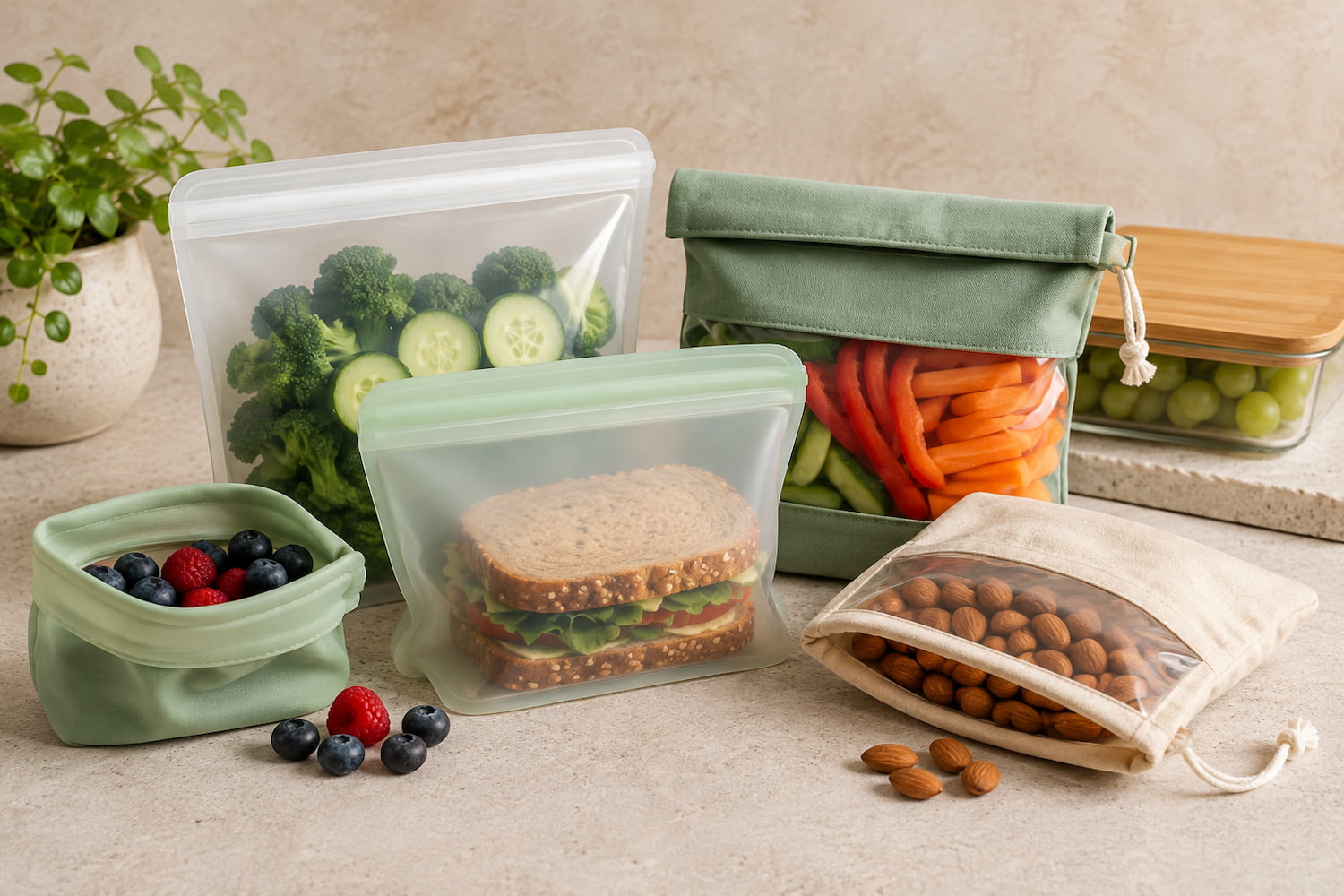
Eco-friendly food storage bags offer a practical way to store snacks, produce, leftovers, and prepared meals while reducing dependence on disposable plastic. Unlike single-use bags, many reusable options can be washed and used repeatedly.
But not every reusable food bag is equally practical. Materials, durability, size, closure design, cleaning requirements, and intended use can all affect which option works best for your household.
This guide explains what makes a food storage bag more sustainable, the main types available, what you can store in them, and how to choose and care for reusable options.
Quick answer: Eco-friendly food storage bags are reusable or lower-waste alternatives to disposable plastic bags. The best option depends on how you use it, how often you can reuse it, and how easily it can be cleaned and maintained.
Table of Contents
Why Choose Eco-Friendly Food Storage Bags?
Switching from disposable storage bags does not require you to completely change your food organization. Eco-friendly food storage bags make this transition easier by giving you a reusable option for many of the bags you already use.
Instead, it is a simple everyday swap that can reduce the number of single-use bags entering your household waste stream.
Reusable food storage bags are particularly useful for people who regularly pack lunches, store leftovers, organize snacks, or freeze portions of food.
Reduce Single-Use Plastic
Traditional plastic storage bags are designed for short-term use. Once they have served their purpose, many are thrown away.
Replacing frequently used disposable bags with washable alternatives can reduce the number of single-use items you consume over time.
The environmental benefit depends largely on how long you continue to use the reusable bag. A durable bag that is used many times generally makes more sense than repeatedly replacing inexpensive reusable products.
Make Everyday Food Storage More Reusable
One of the biggest advantages of reusable food bags is convenience.
Instead of reaching for a new disposable bag every time you need to store something, you can wash the same bag and reuse it again.
Reusable bags can work well for:
- Packed lunches and snacks
- Cut fruits and vegetables
- Leftovers
- Dry pantry foods
- Sandwiches
- Small portions of prepared food
- Freezer storage, when the product is specifically designed for it
They can also make it easier to build a more consistent plastic-free kitchen routine without eliminating convenience.
If you’re making more sustainable changes throughout your kitchen, explore our guide to sustainable kitchen tools for more practical, reusable options.
What Makes a Food Storage Bag Eco-Friendly?
The word “eco-friendly” can describe many different products, so it is worth looking beyond the packaging claims.
A food storage bag is generally a more sustainable choice when it is designed for repeated use, remains functional over time, and fits realistically into your daily routine. When evaluating eco-friendly food storage bags, consider how often you will actually reuse them rather than focusing only on the material.
Reusability and Lifespan
Reusability is one of the most important factors.
A bag that can be washed and reused hundreds of times has a very different environmental profile from a disposable bag used once.
When comparing products, consider:
- How durable the material feels
- Whether the closure remains secure
- How easily the bag can be cleaned
- Whether it resists tearing or cracking
- How frequently you expect to use it
- Whether replacement parts are available, if applicable
A reusable product provides its intended benefit only when you use it repeatedly.
Materials and Manufacturing
Different reusable food bags use different materials, including silicone, fabric, and various plant-based materials.
Material alone does not determine whether a product is sustainable. You should also consider the product’s durability, expected lifespan, manufacturing process, and how you will dispose of it when it eventually reaches the end of its useful life.
For food storage, food-safe materials are especially important. Always check the manufacturer’s instructions for temperature limits and intended uses.
For more information, see the FDA’s guidance on food-contact substances, which covers food packaging and other materials that come into contact with food.
End-of-Life Considerations
No reusable product lasts forever.
Eventually, a food storage bag may become damaged, lose its seal, develop persistent odors, or stop functioning properly.
Before buying, consider what happens at the end of its useful life. A product that lasts for years may be preferable to one that needs frequent replacement, even if both are marketed as sustainable choices.
This is why considering the whole product lifecycle is more useful than choosing an item based on a “green” label.
Types of Eco-Friendly Food Storage Bags
Once you know what makes a food storage bag a more sustainable choice, the next step is understanding the different types available. Each option has different strengths, care requirements, and ideal uses.
Choosing the right type depends on what you store, how often you use it, and how much maintenance you’re comfortable with. Different eco-friendly food storage bags are designed for different storage needs, so choosing the right type can make reusable storage more convenient.
Silicone Food Storage Bags
Eco-friendly food storage bags come in several materials and designs, so the best choice depends on the type of food you regularly store. Silicone food storage bags are among the most popular reusable alternatives to disposable plastic bags. They are flexible, washable, and available in different sizes for everything from snacks to leftovers.
Many are designed with secure closures that help prevent leaks and keep food contained. Some products are also suitable for freezer storage or gentle heating, but temperature limits vary by manufacturer.
Best for:
- Leftovers
- Snacks
- Fruits and vegetables
- Freezer portions
- Meal preparation
Before using a silicone bag with hot food or placing it in an appliance, always check the manufacturer’s temperature and usage instructions.
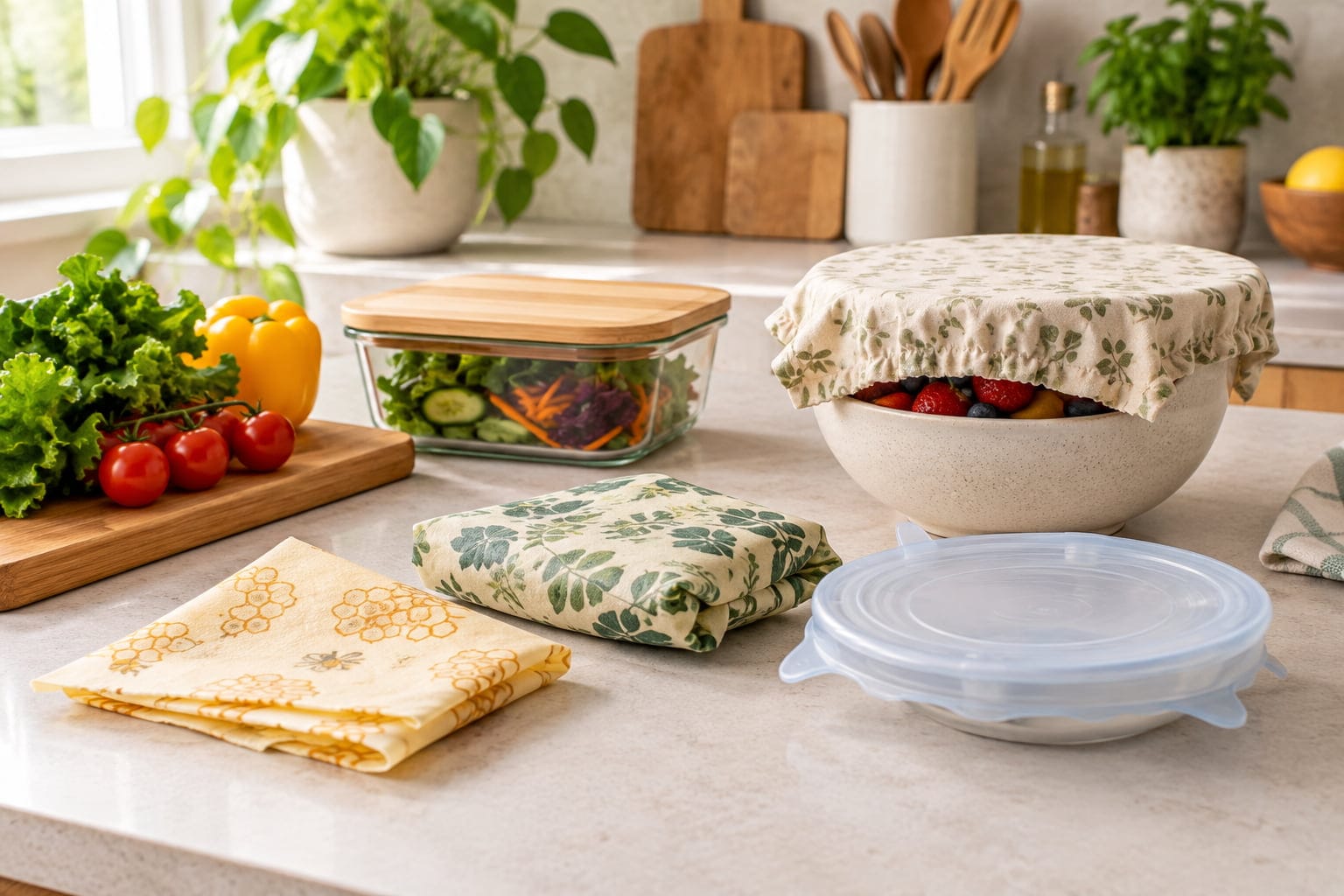
Beyond reusable storage bags, sustainable food wrap is another practical option for covering sandwiches, leftovers, and fresh produce.
Reusable Fabric Food Bags
Reusable fabric bags provide another option for everyday food storage, particularly for dry foods and snacks.
Depending on their construction, they may be made from cotton, organic cotton, recycled fabric, or other washable textiles. Some include waterproof or food-safe inner linings.
Fabric bags are especially convenient for foods that do not require an airtight environment.
Good uses include:
- Bread and baked goods
- Crackers
- Granola
- Nuts and seeds
- Dry snacks
- Lunch items
Because fabric bags can absorb moisture, they may not be the best choice for wet foods unless they have a suitable waterproof lining.
Plant-Based and Compostable Options
Some food storage bags are marketed as plant-based, biodegradable, or compostable alternatives to conventional plastic.
These products can be appealing if reducing petroleum-based packaging is a priority. However, terms such as biodegradable and compostable do not automatically mean a product will break down in any environment.
Pay attention to the manufacturer’s disposal instructions. Some compostable products require specific commercial composting conditions and may not break down properly in a typical backyard compost pile.
For everyday storage, also consider how frequently the product can realistically be reused. A reusable bag that lasts for a long time may be more practical for regular storage than one designed primarily for disposal.
What Can You Store in Reusable Food Bags?
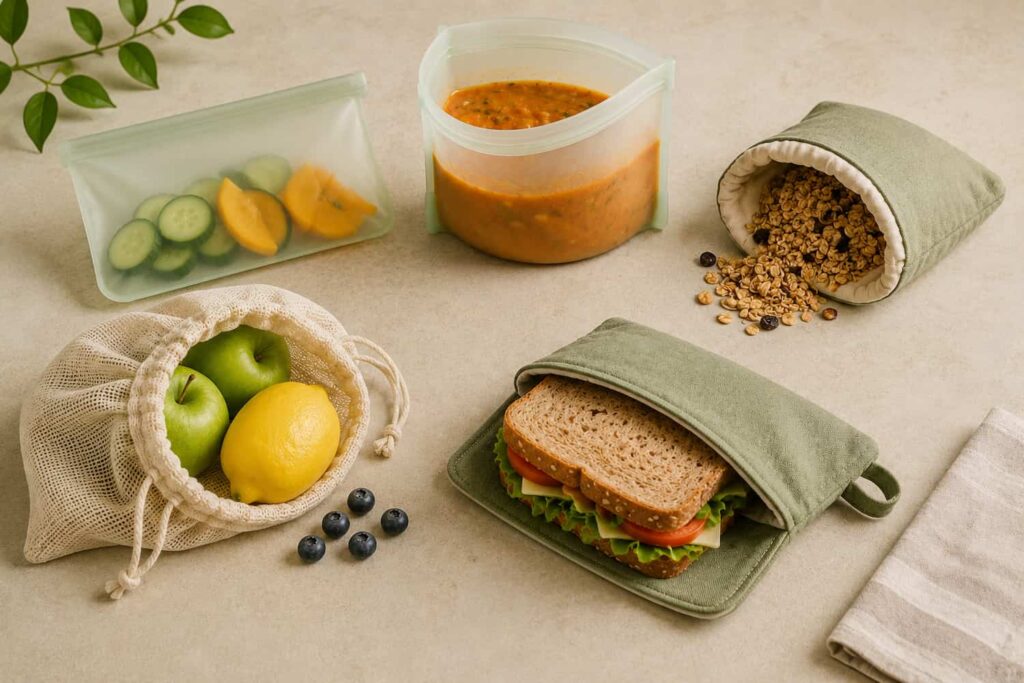
Eco-friendly food storage bags can handle many everyday storage needs, from fresh produce and snacks to leftovers and prepared meals. Eco-friendly food storage bags can replace many common disposable bags, but the best choice depends on the type of food you’re storing.
Using the right bag for each situation can also make cleaning easier and help extend the product’s useful life.
Fresh Produce
Reusable bags can be useful for storing items such as berries, sliced vegetables, herbs, and other produce.
For foods that release moisture, choose a storage option that allows appropriate airflow or is specifically designed for produce. Excess moisture can contribute to faster spoilage.
For delicate produce, avoid overfilling the bag because compression can damage the food.
Snacks and Dry Foods
Dry foods are among the easiest items to store in reusable bags.
You can use them for:
- Trail mix
- Nuts
- Crackers
- Granola
- Cookies
- Dried fruit
- Sandwiches
Fabric food bags can work particularly well for dry snacks, while leak-resistant silicone bags offer more versatility when you also store moist foods.
Prepared Meals and Leftovers
Reusable food storage bags can also be useful for portions of cooked food and leftovers.
Before storing warm food, check whether the bag is designed for that temperature. Allowing food to cool appropriately before storage can also make handling easier.
For liquids, sauces, or foods with high moisture content, choose a bag with a secure, leak-resistant closure and leave enough space for safe sealing.
When storing leftovers, proper refrigeration is also important. The USDA recommends refrigerating leftovers at 40°F or below and using refrigerated leftovers within 3–4 days.
Quick Tip
You don’t necessarily need to replace every disposable storage bag in your kitchen at once.
Start with the bags you use most frequently—such as lunch bags, snack bags, or freezer bags—and replace those first. This makes the transition more practical and helps you get consistent use from each reusable option.
How to Choose the Right Food Storage Bag
With several reusable options available, the best food storage bag is not necessarily the most expensive or the one with the most features. The right choice depends on your food-storage habits, cleaning routine, and how often you expect to reuse the bag. When comparing eco-friendly food storage bags, look for features that match your everyday food-storage habits.
Consider the Food You Store
Start by thinking about what you usually store.
If you mainly pack dry snacks, a reusable fabric bag may be enough. For leftovers, sauces, or moist foods, a washable bag with a reliable seal can be more practical.
Consider these common uses:
- Dry snacks: Fabric or lightweight reusable bags
- Produce: Breathable or appropriately ventilated storage options.
- Sandwiches: Flexible reusable lunch bags
- Leftovers: Leak-resistant silicone bags
- Freezer foods: Bags specifically rated for freezer use
- Liquid foods: Bags with secure, leak-resistant closures
Choosing based on your actual needs helps prevent buying products that end up sitting unused.
Check Size and Closure Design
Size matters more than it may seem.
A very small bag may be useful for snacks but frustrating for leftovers, while an oversized bag can take up unnecessary space and require more material to manufacture.
Look for a size that matches the foods you regularly store.
The closure is equally important. A secure seal can help prevent leaks, spills, and unnecessary food waste.
Before purchasing, check whether the bag has:
- A dependable closure
- A wide opening for easy filling
- Enough capacity for your usual portions
- A stable base, if you prefer upright storage
- Clear measurements, if portioning is important
For freezer use, leave appropriate space for foods that may expand as they freeze and follow the manufacturer’s instructions.
Think About Cleaning and Daily Use
A reusable bag is only useful as a sustainable swap if you are willing to clean and reuse it.
Consider how easily you can:
- Open the bag completely
- Reach the inside corners
- Rinse away food residue
- Dry the interior thoroughly
- Store it between uses
A bag that is difficult to clean may become inconvenient, especially if you use it every day.
For busy households, choosing a design that fits easily into your normal washing and drying routine can make reusable food storage much more sustainable in practice.
How to Clean and Care for Reusable Food Storage Bags
Proper care can help reusable food storage bags remain functional for longer. It can also reduce odors, residue, and unnecessary replacements.
Always follow the manufacturer’s cleaning instructions first, because care requirements vary by material and product design. Proper care is especially important for eco-friendly food storage bags because regular cleaning and drying can extend their useful life.
Everyday Cleaning
For most reusable food bags, cleaning should begin soon after use.
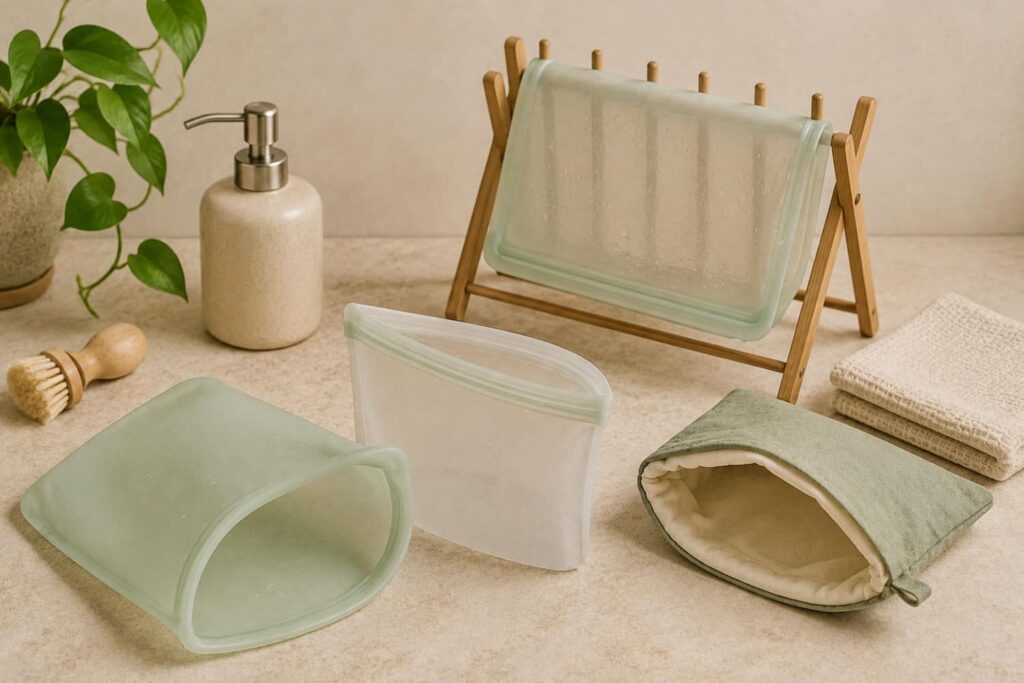
Empty the bag, remove remaining food particles, and rinse it with warm water. Use a small amount of mild dish soap when necessary.
Pay particular attention to:
- Seams and corners
- Closure areas
- Sticky or oily residue
- Areas where food may become trapped
Avoid using harsh cleaning methods unless the manufacturer specifically recommends them.
If a bag is labeled dishwasher-safe, place it in the dishwasher according to the manufacturer’s instructions. Otherwise, hand washing may be the safer choice.
Drying and Storage
Thorough drying is just as important as washing.
Trapped moisture can create an unpleasant environment inside a closed bag and may contribute to odors or unwanted microbial growth.
After washing:
- Rinse away all soap.
- Shake off excess water.
- Open the bag completely.
- Place it in a position where air can circulate inside.
- Allow it to dry fully before storing.
Avoid sealing a damp bag and putting it away immediately.
Once completely dry, store reusable bags in an organized location where they are easy to access. Keeping them visible can also encourage regular reuse.
When to Replace a Reusable Bag
Reusable does not mean permanent.
Inspect your bags regularly and replace them when they can no longer perform their intended function safely.
Signs that a bag may need replacing include:
- Cracks or tears
- A damaged seal
- Persistent odors after cleaning
- Severe discoloration accompanied by deterioration
- Warping that affects usability
- Material breakdown
Don’t keep using a damaged bag just because it was designed to be reusable. Durability is valuable, but safe food storage comes first.
Are Reusable Food Storage Bags Worth It?
For many households, eco-friendly food storage bags can be a worthwhile alternative to frequently purchasing disposable plastic bags.
Their biggest advantage is the ability to use the same storage product repeatedly rather than throwing away a bag after a single use.
However, the environmental value depends on actual reuse.
A reusable bag makes the most sense when you:
- Use it regularly
- Clean and maintain it properly
- Choose a durable option
- Replace disposable bags gradually
- Keep using the product for as long as it remains functional
You also don’t need to create a completely plastic-free kitchen overnight.
A practical approach is to identify the disposable bags you use most often and replace those first. Over time, those small changes can become part of a more sustainable food-storage routine.
Frequently Asked Questions
Reusable food storage bags can be a better choice for reducing single-use plastic when used repeatedly and properly maintained. Eco-friendly food storage bags can offer similar benefits when they are durable and used consistently over time. Their overall environmental benefit depends on factors such as durability, frequency of reuse, material, and eventual disposal.
Food-safe silicone and appropriately designed food-storage fabrics are common choices. The most important factor is that the product is specifically intended for food contact and used according to the manufacturer’s instructions. Avoid assuming that a material is suitable for food simply because it is marketed as sustainable or natural.
Some reusable food storage bags are designed for freezer use, while others are not. Always check the product’s temperature rating and the manufacturer’s instructions before freezing food. For freezer storage, choose a bag that is specifically labeled for that purpose and leave enough room for food to expand when frozen.
There is no single lifespan for every reusable food storage bag. Durability depends on the material, construction, frequency of use, cleaning routine, and how the bag is handled. A well-maintained bag can remain useful for a long time, but it should be replaced if it develops cracks, damaged seals, or other signs of deterioration.
Empty the bag promptly, rinse away food residue, and wash it with mild dish soap when needed. Open the bag fully and allow the inside to dry completely before storing it. Following the manufacturer’s cleaning instructions is important because some bags are dishwasher-safe while others require hand-washing.
Conclusion
Eco-friendly food storage bags can make everyday food storage more sustainable without requiring a major change to your routine. By replacing frequently used disposable bags with durable, reusable alternatives, you can reduce single-use plastic while keeping food storage practical.
The best option depends on your needs. Silicone bags can be useful for moist foods and leftovers, while reusable fabric bags can work well for dry snacks and everyday items. Plant-based and compostable options may also have a place in a lower-waste kitchen, provided you understand their intended use and disposal requirements.
Before buying, consider durability, food safety, size, closure design, cleaning, and how often you’ll actually reuse the bag. A simple product that fits naturally into your routine is often more useful than one with features you rarely need.
You don’t have to replace every disposable storage bag at once. Start with the type you use most often, build the habit of reusing it, and gradually make more sustainable swaps throughout your kitchen.
Ready to reduce single-use plastic in your kitchen? Start with one reusable food storage bag and make your next everyday storage swap a more sustainable one.
2 thoughts on “Eco-Friendly Food Storage Bags: A Practical Guide”