
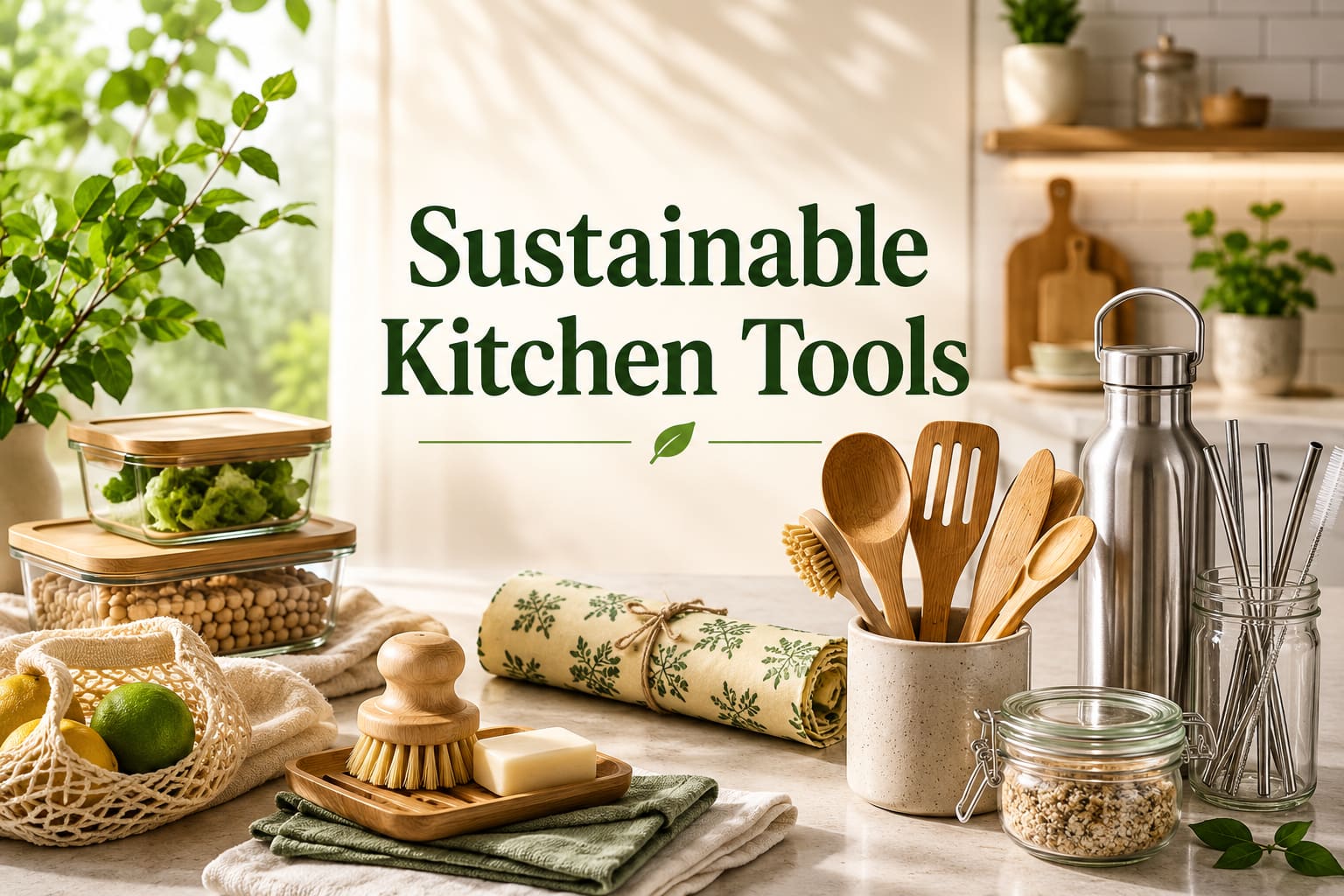
Every year, millions of pounds of plastic kitchen gadgets end up in landfills — worn out, cracked, or simply out of style. If you’ve ever tossed a warped plastic spatula or a peeling non-stick pan, you already know the problem.
The good news? Switching to sustainable kitchen tools doesn’t mean sacrificing style, function, or your budget. In fact, it often means the opposite — better durability, healthier cooking, and long-term savings.
In this guide, you’ll discover exactly which eco-friendly kitchen tools are worth the investment, how to choose them wisely, and simple swaps that make a real difference for the environment.
Table of Contents
What Are Sustainable Kitchen Tools?
Sustainable kitchen tools are cookware, utensils, and gadgets made from renewable, biodegradable, or long-lasting materials. Unlike disposable plastic items, they’re designed to be used for years — sometimes generation.
These tools typically come from:
- Natural materials like bamboo, wood, and stainless steel
- Recycled or upcycled sources
- Manufacturers with ethical, low-waste production practices
The goal is simple: reduce landfill waste, cut down on microplastics in food, and lower your kitchen’s overall carbon footprint.
Why Switch to Sustainable Kitchen Tools?
Making the switch isn’t just a trend — it’s a practical decision with real benefits.
1. Healthier Cooking
Many plastic and non-stick tools release harmful chemicals when exposed to heat. Sustainable kitchen tools made from stainless steel, cast iron, or wood avoid this risk entirely.
2. Long-Term Cost Savings
Cheap plastic tools wear out fast and need constant replacing. Durable, sustainable kitchen tools cost more upfront but last significantly longer.
3. Reduced Environmental Impact
Plastic kitchenware can take hundreds of years to decompose. Choosing biodegradable or recyclable alternatives directly reduces landfill contribution.
4. Better Cooking Performance
Cast iron pans distribute heat more evenly. Wooden spoons don’t scratch cookware. Quality often improves right alongside sustainability.
Top Sustainable Kitchen Tools to Buy
Here’s a breakdown of the best sustainable kitchen tools for every part of your kitchen.
Cookware
- Cast iron skillets – Nearly indestructible and naturally non-stick when seasoned
- Stainless steel pots and pans – Durable, recyclable, and free of harmful coatings
- Ceramic-coated cookware – A safer alternative to traditional non-stick surfaces
Utensils
- Bamboo spoons and spatulas – Fast-growing, biodegradable, and gentle on cookware
- Wooden cutting boards – Naturally antibacterial and long-lasting with proper care
- Stainless steel measuring cups and spoons – Rust-resistant and built to last
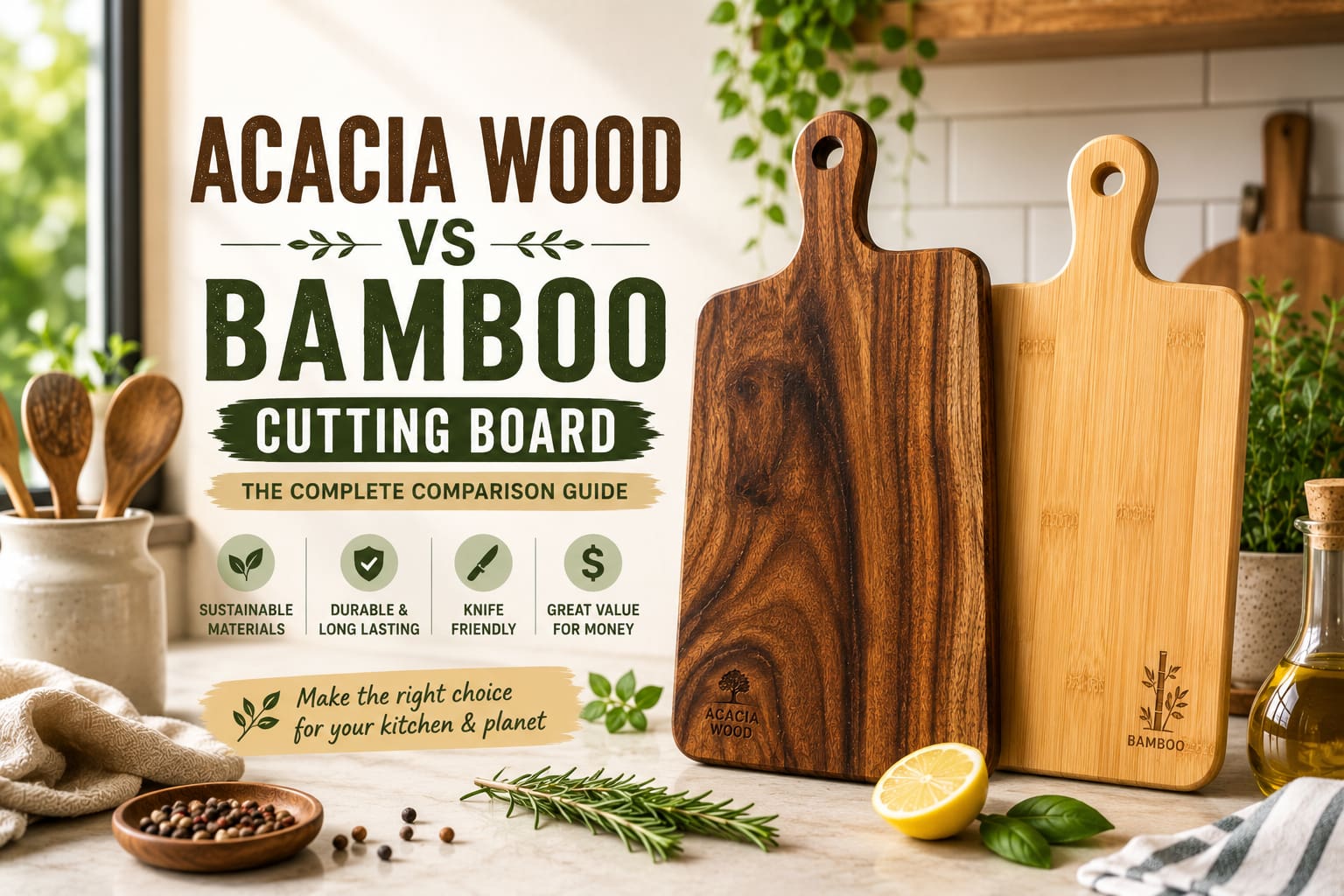
Not sure which material is right for your kitchen? Read our detailed comparison of Acacia Wood vs Bamboo Cutting Board to learn which option offers better durability, sustainability, and value.
Storage Solutions
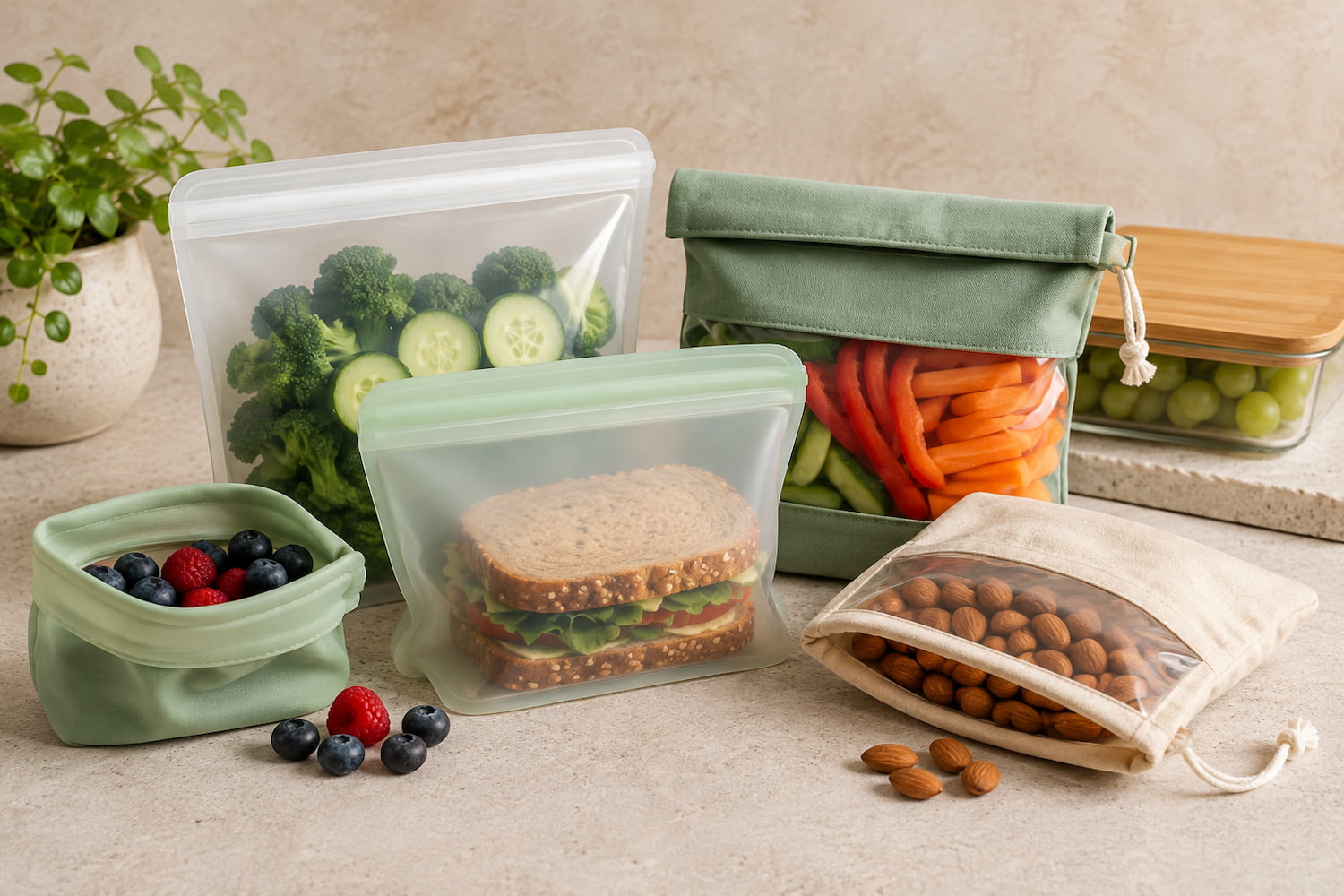
- Glass food storage containers – Reusable, microwave-safe, and free of plastic leaching
- Beeswax food wraps – A reusable alternative to plastic cling film
- Silicone stretch lids – Reduce single-use plastic wrap significantly
For a more detailed look at reusable food storage, see our guide to eco-friendly food storage bags.
Small Kitchen Tools
- Compost bins – Turn food scraps into garden-ready compost
- Reusable coffee filters – Cut down on daily paper waste
- Natural fiber dish brushes – Replace plastic sponges that shed microplastics
Materials to Look For
When shopping for sustainable kitchen tools, prioritize these materials:
- Bamboo – Renewable, biodegradable, and naturally antimicrobial
- Stainless steel – Durable, recyclable, and rust-resistant
- Cast iron – Extremely long-lasting with proper seasoning
- Glass – Fully recyclable and chemical-free
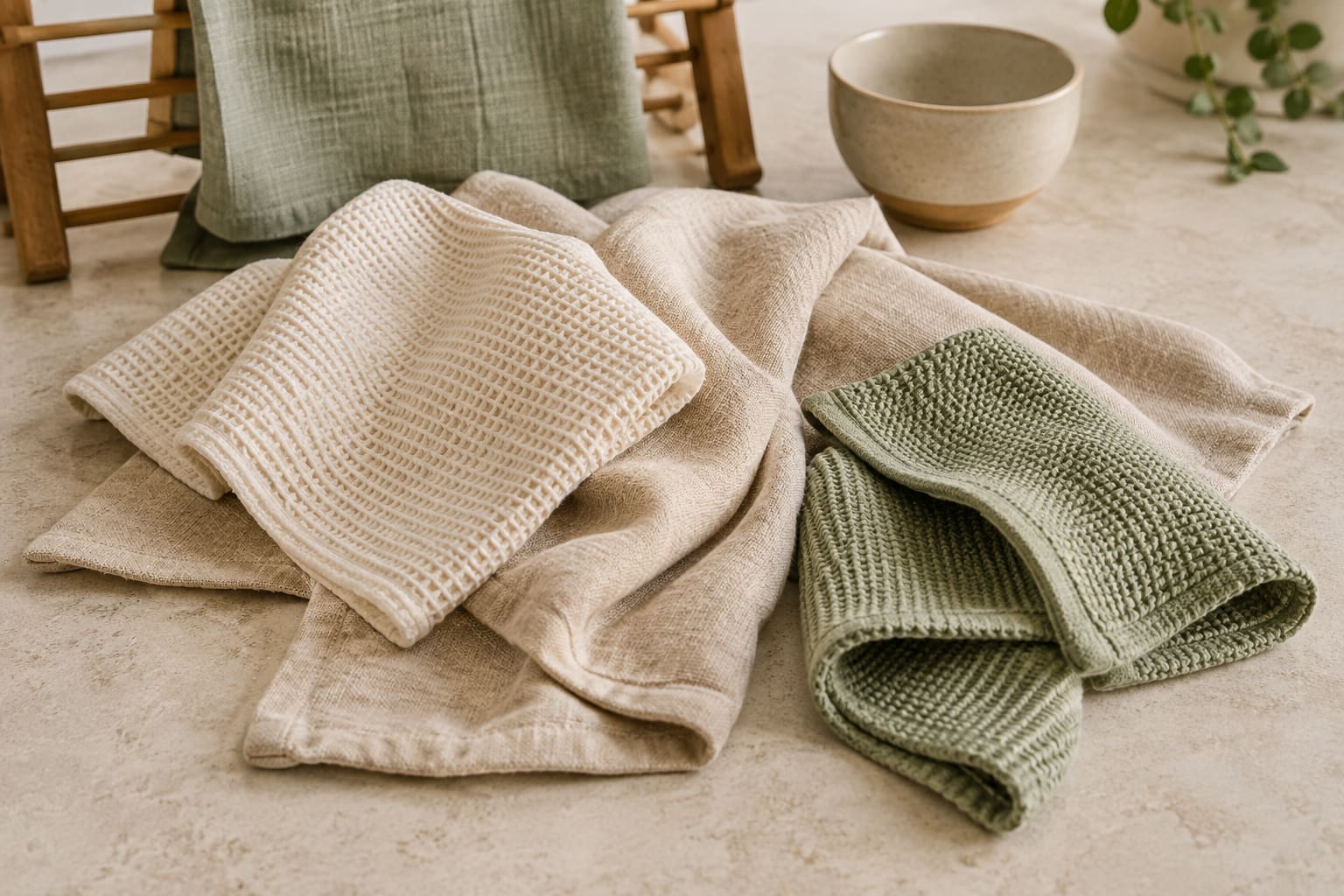
- Organic cotton or linen – Great materials for reusable kitchen towels and other everyday kitchen textiles. For a closer look at materials, durability, and care, see our guide to eco-friendly kitchen towels.
Materials to Avoid
Not all “eco” labels are trustworthy. Watch out for:
- Non-stick coatings containing PFOA or PFAS
- Cheap plastic labeled as “BPA-free” but still single-use
- Products with excessive, non-recyclable packaging
Sustainable Kitchen Tools vs Traditional Kitchen Tools: A Quick Comparison
Wondering if the switch is really worth it? Here’s how sustainable options stack up against traditional kitchen tools.
| Feature | Traditional Tools | Sustainable Tools |
|---|---|---|
| Material | Plastic, non-stick coatings | Bamboo, stainless steel, cast iron |
| Lifespan | 1–2 years | 5–20+ years |
| Health Impact | May release chemicals when heated | Chemical-free, safer for food |
| Environmental Impact | Landfill waste, slow decomposition | Biodegradable or fully recyclable |
| Upfront Cost | Lower | Higher |
| Long-Term Cost | Higher (frequent replacement) | Lower (one-time investment) |
As the table shows, sustainable kitchen tools cost more initially but save money and reduce waste significantly over time.
How to Build an Eco-Friendly Kitchen on a Budget
You don’t need to replace everything overnight. Try this approach instead:
- Start with daily-use items — cutting boards, sponges, and utensils wear out fastest
- Replace items as they break, rather than discarding usable plastic tools immediately
- Buy secondhand cast iron or stainless steel from thrift stores
- Invest in multi-use tools to avoid clutter and unnecessary purchases
- Choose quality over quantity — one great chef’s knife beats five mediocre ones
This gradual transition keeps costs manageable while still reducing your environmental footprint.
Caring for Your Sustainable Tools
Proper care extends the life of your sustainable kitchen tools significantly.
- Wood and bamboo: Hand wash only, dry immediately, and oil occasionally
- Cast iron: Avoid soap-heavy washing; re-season after cleaning
- Stainless steel: Dishwasher-safe in most cases, but hand washing preserves shine
- Glass containers: Avoid sudden temperature changes to prevent cracking
With the right care, many of these tools can genuinely last a lifetime.
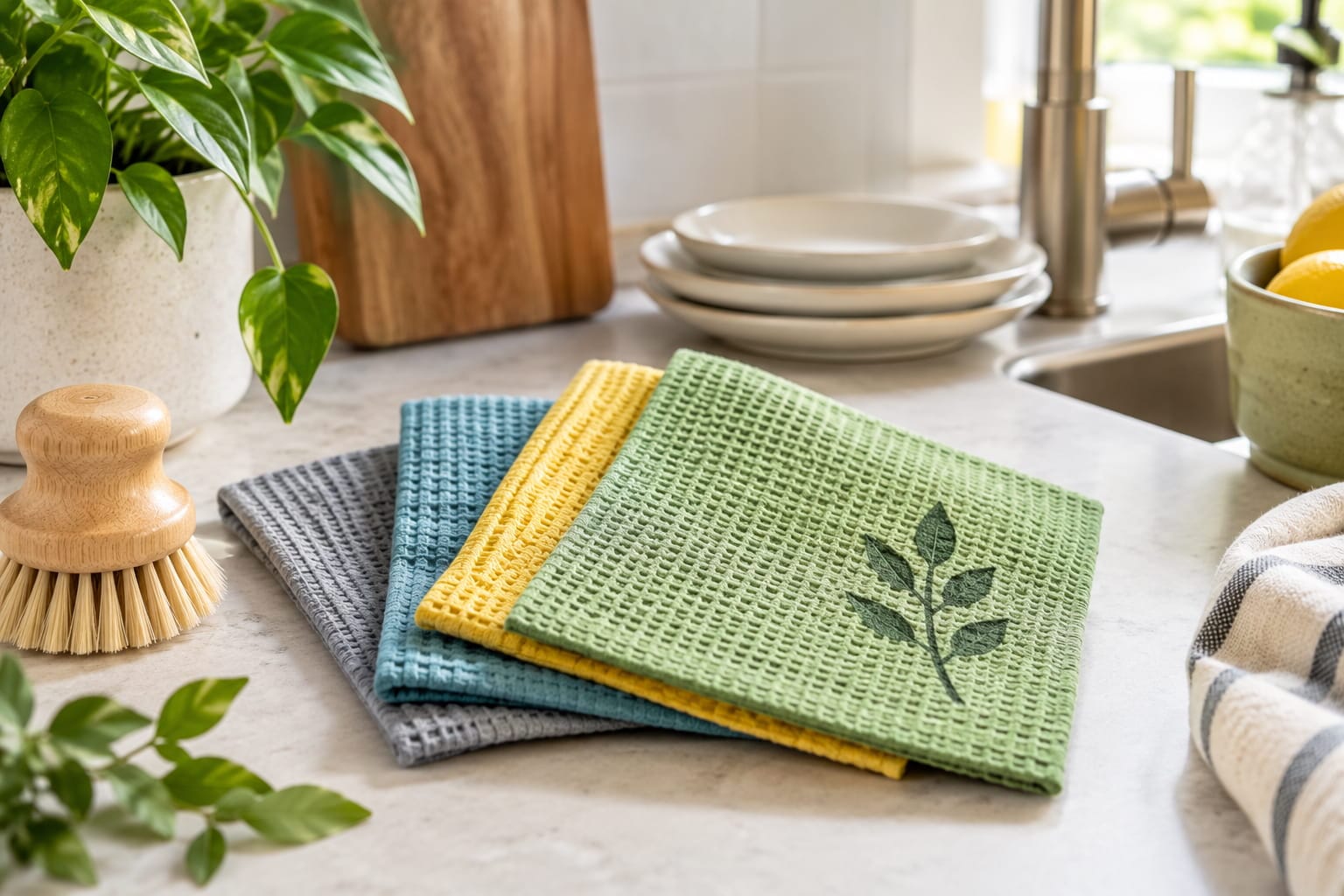
For a closer look at choosing a reusable cloth for everyday kitchen cleaning, see our guide to eco-friendly dishcloths
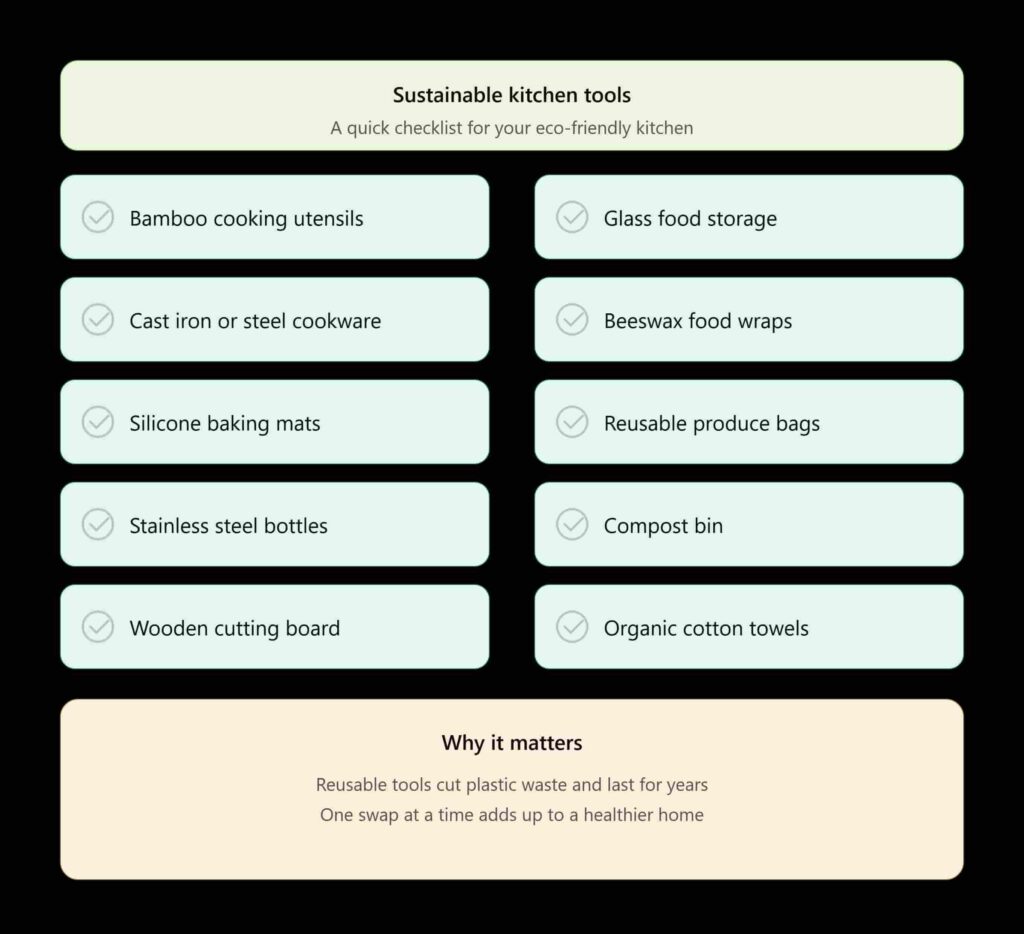
Sustainable Kitchen Tools Checklist
Use this quick checklist when shopping for your eco-friendly kitchen:
- Bamboo cooking utensils
- Cast iron or steel cookware
- Silicone baking mats
- Stainless steel bottles
- Wooden cutting board
- Glass food storage
- Beeswax food wraps
- Reusable produce bags
- Compost bin
- Organic cotton towels
Frequently Asked Questions
Bamboo utensils, stainless steel cookware, and glass storage containers are the easiest and most affordable starting points.
They often cost more upfront, but their durability means you replace them far less often, saving money long-term.
Yes. Bamboo grows extremely fast, requires no pesticides, and is fully biodegradable, making it one of the most sustainable materials available.
Some can be recycled depending on your local facility, but many plastic kitchen items aren’t accepted. Check with your local recycling program first.
Look for third-party certifications, transparent sourcing information, and materials like bamboo, stainless steel, or recycled content rather than vague “eco-friendly” marketing claims.
Conclusion
Switching to sustainable kitchen tools is one of the simplest ways to reduce household waste, save money, and create a healthier cooking environment — without overhauling your entire kitchen overnight.
Start small: swap one plastic item at a time, choose durable materials, and care for your tools properly. Over time, these small changes add up to a meaningful environmental impact.
Ready to upgrade your kitchen? Start with one sustainable swap this week — your future self (and the planet) will thank you.
Looking to make your entire home more eco-friendly? Your bathroom routine is just as important as your kitchen. Read our 10 Environmentally Friendly Shampoos: The Complete Eco Guide (2026) to discover sustainable shampoo options, eco-friendly ingredients, and practical tips for healthier hair and a greener planet.
One thought on “15 Best Sustainable Kitchen Tools for Every Home”