Introduction
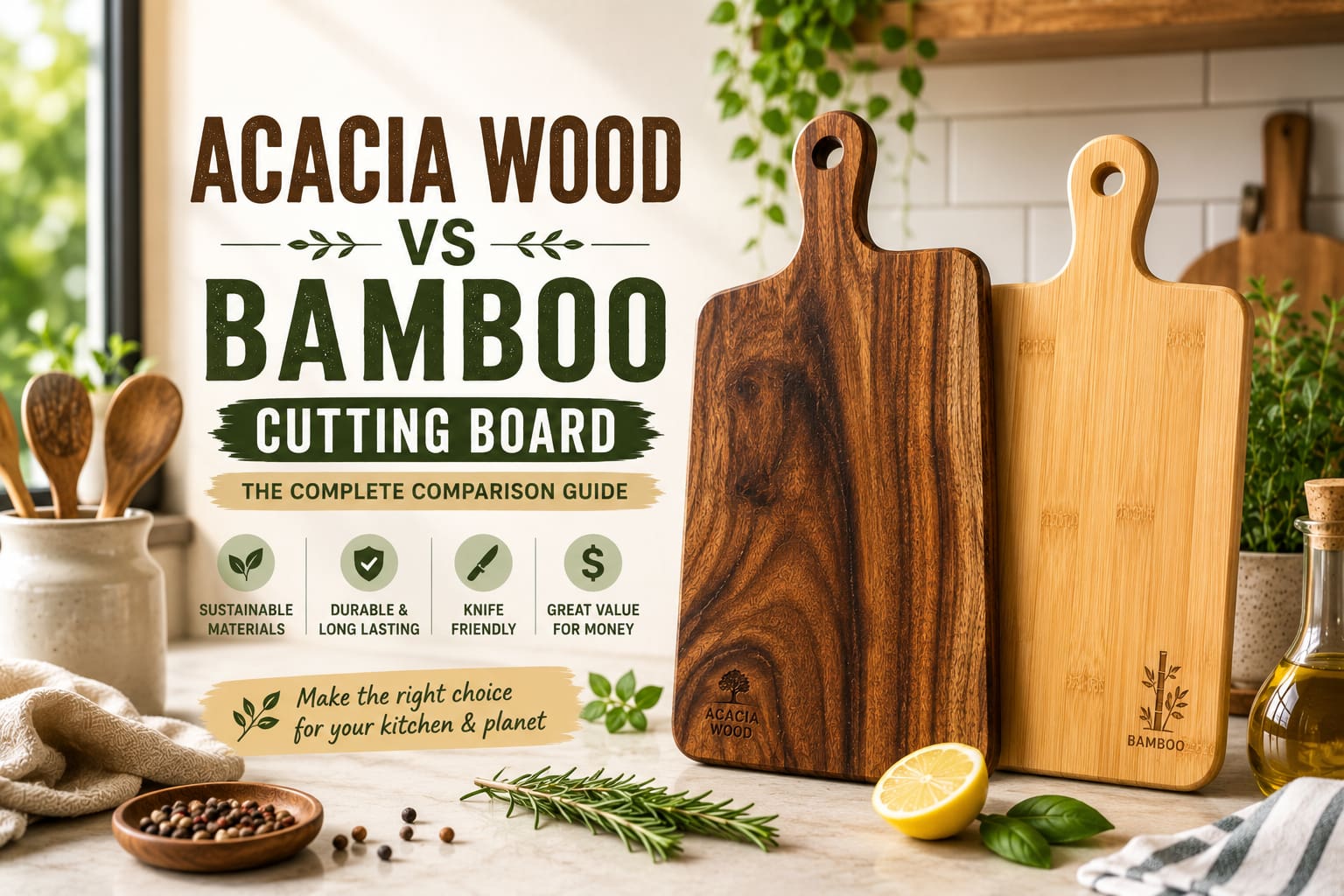
Choosing the right cutting board is more important than many people realize. A quality cutting board protects your kitchen knives, provides a safe food preparation surface, and can last for years with proper care. Two of the most popular eco-friendly choices today are acacia wood and bamboo cutting boards.
At first glance, they look similar. Both are attractive, reusable, and far better for the environment than many plastic alternatives. However, they perform quite differently in terms of durability, knife-friendliness, maintenance, moisture resistance, and long-term value.
If you’re wondering whether an acacia wood vs bamboo cutting board is the better investment, this guide compares the materials side by side so you can confidently choose the best option for your cooking style and budget.
Table of Contents
Quick Answer
Choose an Acacia Wood Cutting Board if you want:
- Better durability
- Premium appearance
- Excellent moisture resistance
- Long-term investment
Choose a Bamboo Cutting Board if you want:
- Lower price
- Lightweight design
- Highly renewable material
- Easy everyday maintenance
For most home cooks looking for long-lasting quality, acacia wood is usually the better overall choice. However, bamboo remains an excellent option for buyers who prioritize affordability and sustainability.
Acacia vs Bamboo at a Glance
The infographic below highlights the key differences between acacia wood and bamboo cutting boards at a glance. For a more detailed comparison, refer to the comparison table below.
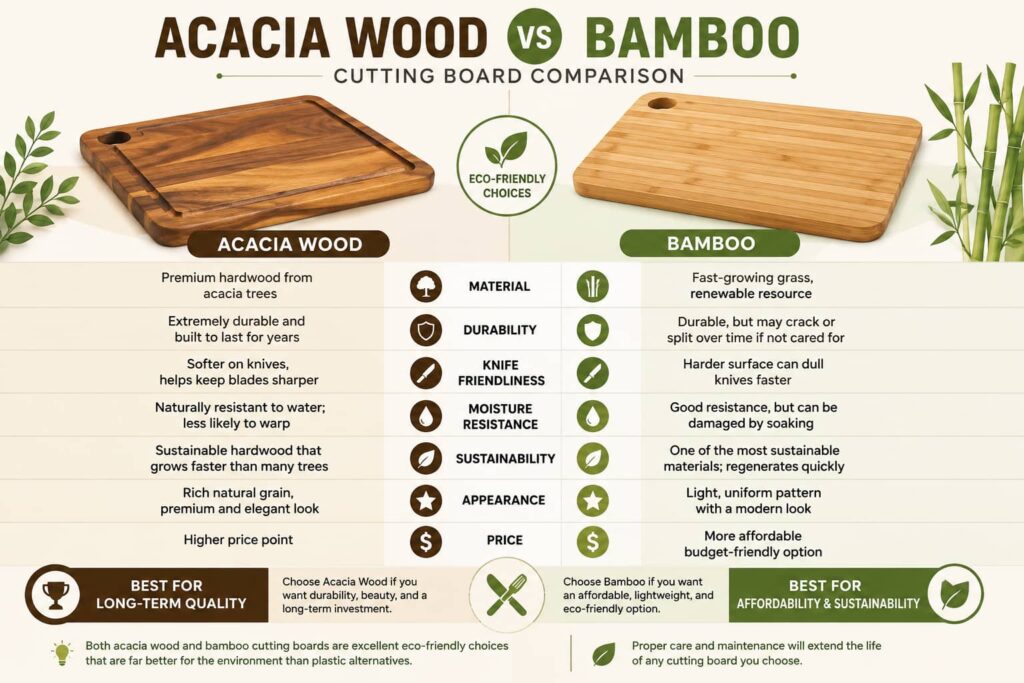
Acacia Wood vs Bamboo Cutting Board Comparison
| Feature | Acacia Wood | Bamboo |
|---|---|---|
| Durability | ⭐⭐⭐⭐⭐ | ⭐⭐⭐⭐☆ |
| Knife Friendliness | ⭐⭐⭐⭐⭐ | ⭐⭐⭐☆☆ |
| Water Resistance | ⭐⭐⭐⭐⭐ | ⭐⭐⭐⭐☆ |
| Sustainability | ⭐⭐⭐⭐☆ | ⭐⭐⭐⭐⭐ |
| Maintenance | ⭐⭐⭐⭐☆ | ⭐⭐⭐⭐☆ |
| Appearance | ⭐⭐⭐⭐⭐ | ⭐⭐⭐⭐☆ |
| Price | Higher | Lower |
| Best For | Long-term use | Budget-friendly kitchens |
What Is an Acacia Wood Cutting Board?
An acacia cutting board is made from hardwood harvested from acacia trees. Acacia is known for its dense grain, natural beauty, and excellent moisture resistance, making it one of the most popular hardwoods for kitchen accessories.
Benefits of Acacia Wood
- Extremely durable
- Rich natural grain and premium appearance
- Better resistance to water damage
- Less likely to warp with proper care
- Can last for many years
Because of these qualities, many premium kitchen brands use acacia wood for cutting boards, serving boards, and butcher blocks. If you’re looking to build a greener cooking space, explore our Sustainable Kitchen Tools guide to discover more eco-friendly essentials for your home.
What Is a Bamboo Cutting Board?
Although bamboo looks like wood, it is technically a type of grass. It grows much faster than hardwood trees, making it one of the most renewable materials used in kitchen products.
Modern bamboo cutting boards are created by compressing bamboo strips under high pressure to form a durable cooking surface.
Benefits of Bamboo
- Highly sustainable
- Affordable
- Lightweight
- Easy to find
- Attractive modern appearance
Its eco-friendly nature makes bamboo a favorite among environmentally conscious households.
Durability Comparison
Durability is one of the biggest differences between these two materials.
Acacia Wood
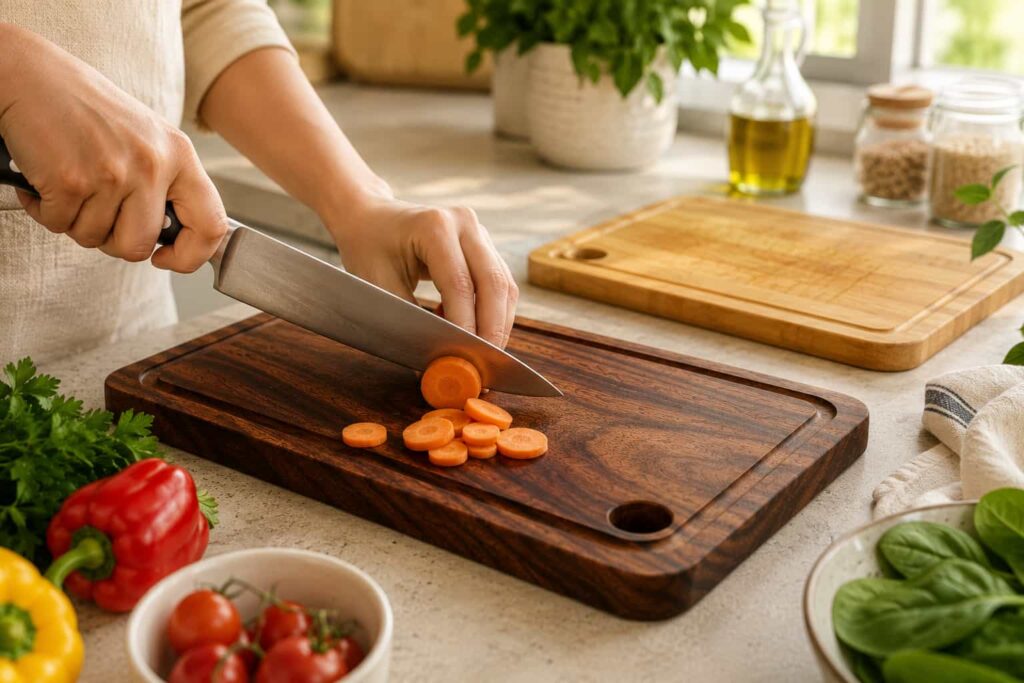
Acacia is a dense hardwood that naturally resists scratches, dents, and heavy daily use. With regular oiling and proper cleaning, an acacia cutting board can remain in excellent condition for many years.
Bamboo
Bamboo is also durable, but because it is manufactured by compressing fibers together, lower-quality boards may eventually develop cracks or split after prolonged exposure to moisture or repeated washing.
Winner: Acacia Wood
For long-term durability, acacia generally has the advantage.
If you’re planning to build a more sustainable kitchen, explore our Sustainable Kitchen Tools guide for more durable eco-friendly product recommendations.
Which Is Better for Your Kitchen Knives?
A cutting board should protect your knives rather than dull them quickly.
Acacia has a slightly softer cutting surface than bamboo, allowing knife edges to stay sharper for longer.
Bamboo is harder due to its dense fibers and the adhesives used during manufacturing. While this makes it durable, it can wear knife-edges a little faster under heavy daily use.
Winner: Acacia Wood
If you cook frequently and want to extend the life of your kitchen knives, acacia is usually the better choice.
Moisture Resistance
Kitchen cutting boards are constantly exposed to water, vegetables, meat juices, and frequent washing.
Acacia naturally contains oils that help resist moisture absorption, reducing the chances of swelling or warping when properly maintained.
Bamboo also performs well because of its tightly packed fibers, but prolonged soaking or dishwasher use can eventually damage the board.
Winner: Acacia Wood
Its natural resistance to moisture gives it a slight edge for everyday kitchen use.
Sustainability: Which Is More Eco-Friendly?
Both acacia and bamboo are considered environmentally friendly alternatives to plastic cutting boards, but they differ in how they are sourced and renewed.
Acacia Wood
Acacia trees grow faster than many traditional hardwoods, making them a more sustainable choice than oak or maple. When harvested responsibly, acacia offers an excellent balance between durability and environmental impact.
Bamboo
Bamboo is one of the fastest-growing plants in the world. It can regrow within a few years without replanting, making it one of the most renewable materials available. It also requires less water and fewer pesticides than many tree species.
Winner: Bamboo
If sustainability is your highest priority, bamboo is the better choice.
Maintenance and Cleaning
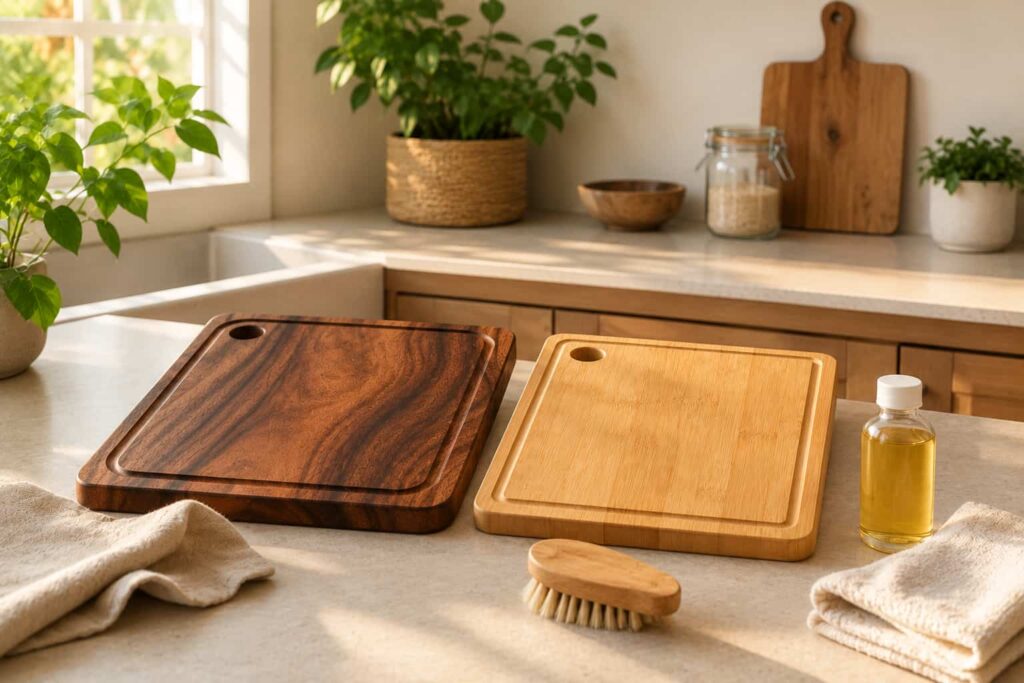
Proper care can significantly extend the life of any wooden cutting board.
Caring for an Acacia Cutting Board
- Wash by hand using warm water and mild soap.
- Dry immediately after washing.
- Apply food-grade mineral oil every few weeks.
- Never leave it soaking in water.
- Avoid putting it in the dishwasher.
Caring for a Bamboo Cutting Board
- Hand wash only.
- Dry thoroughly before storing.
- Oil occasionally to prevent drying.
- Keep away from excessive heat and moisture.
Both boards are easy to maintain if cleaned correctly.
Winner: Tie
Neither material requires complicated maintenance, although acacia benefits slightly more from regular oiling.
Food Safety
Food safety depends more on proper cleaning than the material itself.
Both acacia and bamboo naturally resist bacteria better than many plastic boards with deep knife grooves. The USDA Food Safety and Inspection Service also recommends using separate cutting boards for raw meat and ready-to-eat foods to reduce the risk of cross-contamination. Washing the board after each use and allowing it to dry completely helps reduce bacterial growth.
To prevent cross-contamination, consider using separate cutting boards for raw meat and fresh produce regardless of the material.
Winner: Tie
Both materials are safe when properly cleaned and maintained.
Price Comparison
Price is often an important deciding factor.
Acacia cutting boards usually cost more because they are made from premium hardwood and often feature attractive natural grain patterns.
Bamboo cutting boards are generally more affordable while still offering excellent durability for everyday cooking.
If you’re shopping on a tight budget, bamboo provides outstanding value. However, spending a little more on an acacia board can be worthwhile if you want a product that offers a premium appearance and long-lasting performance.
Winner: Bamboo
For affordability, bamboo is the better option.
Pros and Cons
Acacia Wood Cutting Board
Pros
- Extremely durable
- Beautiful natural appearance
- Gentle on knife edges
- Long lifespan
- Excellent moisture resistance
Cons
- Higher initial cost
- Requires regular oiling
- Heavier than bamboo
Bamboo Cutting Board
Pros
- Budget-friendly
- Highly renewable material
- Lightweight Easy to find
- Modern appearance
Cons
- A harder surface may dull knives faster
- Lower-quality boards may split over time
- Less premium appearance than hardwood
Who Should Buy an Acacia Cutting Board?
An acacia cutting board is the better choice if you:
- Cook almost every day.
- Want a premium-looking kitchen accessory.
- Prefer a board that can last for many years.
- Want better protection for your kitchen knives.
- Don’t mind paying a little more for higher quality.
Who Should Buy a Bamboo Cutting Board?
A bamboo cutting board is ideal if you:
- Have a limited budget.
- Prefer lightweight kitchen tools.
- Want one of the most sustainable materials available.
- Need a reliable board for occasional cooking.
- You’re buying your first eco-friendly cutting board.
Our Recommendation
After comparing durability, maintenance, knife friendliness, sustainability, and overall value, we recommend an acacia wood cutting board for most home cooks. Its hardwood construction offers excellent durability, better moisture resistance, and a surface that’s gentler on kitchen knives.
If you’re looking for a long-term investment and cook regularly, acacia is the better choice.
However, if your priority is affordability and sustainability, a bamboo cutting board is still an excellent option. It’s lightweight, renewable, and provides great value for everyday use.
Overall Pick: ⭐ Acacia Wood Cutting Board
Final Verdict: Which Cutting Board Should You Choose?
When comparing acacia wood vs bamboo cutting board, there isn’t a single winner for everyone. The best choice depends on your cooking habits, budget, and priorities.
Choose an acacia wood cutting board if you value durability, a premium appearance, excellent moisture resistance, and better protection for your kitchen knives. Although it costs more, its long lifespan makes it a worthwhile investment for frequent home cooks.
Choose a bamboo cutting board if you’re looking for an affordable, lightweight, and environmentally friendly option. Bamboo offers excellent value and is ideal for everyday cooking, especially if sustainability is your top priority.
For most kitchens, acacia offers the best balance of durability, performance, and long-term value. While bamboo remains an excellent eco-friendly alternative, acacia stands out as the better all-around choice for regular use.
Frequently Asked Questions
Yes. Acacia wood is generally more durable, more moisture-resistant, and gentler on knife edges than bamboo. If you’re looking for a long-lasting cutting board, acacia is often the better investment.
With proper care, an acacia wood cutting board usually lasts longer because it is a dense hardwood that resists cracking and warping better than many bamboo boards.
Yes. Bamboo grows much faster than hardwood trees and regenerates without replanting, making it one of the most renewable materials available.
Acacia wood is generally more knife-friendly because its surface is slightly softer than bamboo, helping reduce wear on knife edges over time.
No. Neither acacia nor bamboo cutting boards should be placed in the dishwasher. Excessive heat and prolonged exposure to water can cause cracking, warping, or splitting. Handwashing with mild soap and warm water is the safest way to clean them.
Conclusion
Both acacia and bamboo cutting boards are excellent alternatives to plastic, offering durability and reusability, and are a sustainable option for modern kitchens. However, they serve slightly different needs.
If you want a premium cutting board that delivers outstanding durability, better knife protection, and long-term performance, acacia wood is the clear winner.
If affordability, lightweight design, and environmental sustainability matter most, bamboo is still an excellent choice that performs well for everyday food preparation.
By understanding the strengths and limitations of each material, you can confidently choose the cutting board that best fits your kitchen, cooking habits, and budget.
Want to create a greener kitchen? Explore our Sustainable Kitchen Tools guide for more eco-friendly product recommendations.