
A kitchen towel may seem like a small household item, but the type you use—and how often you replace it—can affect how much waste your everyday routine creates.
Eco-friendly kitchen towels offer a practical alternative to frequently discarded paper towels and other short-lived kitchen textiles. However, the most sustainable choice isn’t always the product with “eco-friendly” on the label.
The material, durability, absorbency, manufacturing claims, and how long you actually use the towel all matter.
This guide explains what to look for when choosing eco-friendly kitchen towels, how different materials compare, and how to build a practical collection that fits your kitchen routine.
Table of Contents
What Makes Kitchen Towels Eco-Friendly?
A kitchen towel becomes more environmentally responsible when it is designed for repeated, long-term use and made with materials or processes that reduce unnecessary environmental impact.
In practice, eco-friendly kitchen towels are usually evaluated by looking at:
- Material source
- Reusability
- Durability
- Absorbency
- Manufacturing transparency
- Chemical treatments
- Packaging
- End-of-life options
The most sustainable towel is often one that performs well enough to replace disposable products and lasts through many washing cycles.
A towel does not need to be perfect in every category to be useful. Instead, look at the overall life cycle and practical lifespan of the product.
Quick Answer: What Should You Look For?
If you want a simple answer, look for eco-friendly kitchen towels that are:
- Reusable and machine washable
- Durable enough for repeated washing
- Made from a material suitable for your needs
- Absorbent without being excessively bulky
- Free from unnecessary treatments or vague claims
- Sold with minimal packaging
- Easy to use for more than one kitchen task
For many households, having a small rotation of durable towels can be more practical than relying heavily on disposable paper products.
The goal is not to buy the largest collection possible. It is to choose towels that you will actually use for a long time.
Best Materials for Eco-Friendly Kitchen Towels
Different materials have different strengths. The best option depends on whether you mainly need towels for drying dishes, wiping counters, handling spills, or replacing disposable products.
Organic Cotton
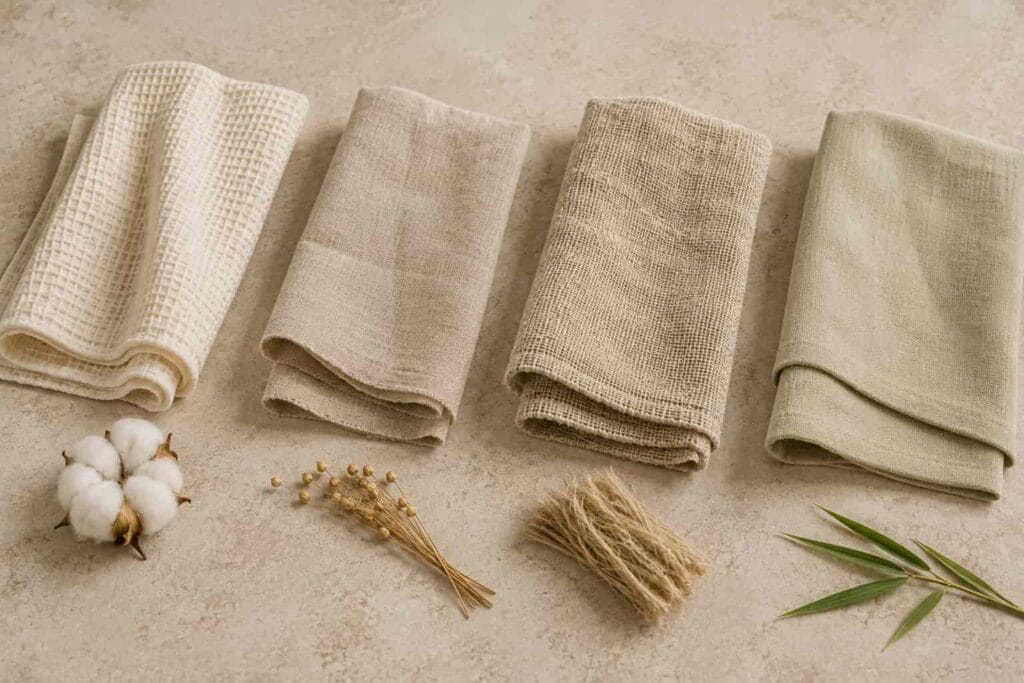
Organic cotton is a popular option for eco-friendly kitchen towels because it is soft, absorbent, and familiar to many households.
Organic cotton towels can work well for:
- Drying dishes
- Wiping countertops
- Handling everyday spills
- General kitchen cleaning
Durability varies by construction, so a thicker or more tightly woven towel may last longer than a thin decorative one.
Look beyond the word “organic” and consider the overall quality of the towel.
Linen
Linen is a strong natural fiber that can be useful for kitchen textiles.
It is often valued for its:
- Durability
- Quick-drying properties
- Low lint production
- Long-term usability
Linen may initially feel less soft than cotton, but it can become more comfortable with repeated use.
It is particularly useful for drying dishes and glassware.
Hemp
Hemp is another durable plant-based fiber that may appear in sustainable household textiles.
Hemp kitchen towels can offer:
- Strong fibers
- Long-term durability
- Reusability
- Good suitability for everyday textile use
Blended fabrics containing hemp and cotton may also combine the properties of both materials.
Bamboo-Derived Fabrics
Some towels and cloths are marketed as bamboo products.
However, the term bamboo does not automatically tell you everything about the finished textile. The way a fabric is processed can affect its overall characteristics and environmental profile.
For example, the FTC has highlighted the importance of accurate labeling and clear environmental claims for some textiles marketed as bamboo.
Instead of relying only on the marketing label, look for clear information about:
- Fiber composition
- Manufacturing transparency
- Care instructions
- Product durability
A well-made towel you use for years may be more practical than a heavily marketed product that wears out quickly.
Eco-Friendly Kitchen Towels vs Paper Towels
One of the main advantages of eco-friendly kitchen towels is that they can be washed and reused rather than discarded after a single use.
Reusable towels
Reusable towels may:
- Last through many cleaning cycles.
- Reduce reliance on disposable products.
- Serve multiple kitchen tasks.
- Create less frequent household waste.
Paper towels
Paper towels can be convenient, particularly for certain messy tasks. However, they are designed to be used briefly and discarded.
For a lower-waste kitchen routine, many households use reusable towels for most everyday cleaning while keeping disposable paper products for situations where they are genuinely needed.
This approach can be more realistic than trying to eliminate every disposable product immediately.
Are Reusable Cleaning Cloths a Good Alternative?
Reusable cleaning cloths can complement kitchen towels rather than completely replacing them.
A towel may be better for drying dishes and handling larger amounts of water, while smaller reusable cloths can be useful for:
- Countertops
- Tables
- Appliance surfaces
- Small spills
- Daily wipe-downs
The main difference is purpose.
You may use eco-friendly kitchen towels primarily for drying and general kitchen tasks, while keeping separate reusable cleaning cloths for surfaces that require frequent wiping.
Separating these jobs can also make a kitchen routine easier to manage.
If you are looking for a more specific option for everyday wiping and cleaning, our guide to eco-friendly dishcloths explains how to compare reusable, washable, and Swedish dishcloths.
How to Choose the Best Organic Kitchen Towels
The phrase best organic kitchen towels does not describe one universal product.
The best choice depends on what you want the towel to do.
1. Check the Material Composition
Look for clear information about the actual fiber content.
Some products may contain a blend rather than being made entirely from one material. Understanding the composition helps you choose a towel based on performance instead of marketing alone.
2. Consider Durability
A kitchen towel is used frequently.
Look for:
- Strong stitching
- Dense fabric construction
- Good-quality edges
- A material suitable for repeated washing
A longer-lasting towel can be more useful than a cheaper product that needs frequent replacement.
3. Choose the Right Size
Very large towels may be useful for drying dishes but less convenient for quick cleaning.
Smaller towels can be easier to store and wash.
A practical set may include different sizes rather than making every towel serve every purpose.
4. Think About Your Actual Kitchen Routine
If you frequently wash dishes by hand, absorbency may be your priority.
If you use a dishwasher and mostly need quick surface cleaning, thinner reusable cleaning cloths may be more useful.
Choose eco-friendly kitchen towels based on real habits rather than buying products for every possible task.
What to Look for in Non-Toxic Kitchen Towels
The term non-toxic kitchen towels is often used broadly, so it is worth looking beyond the label.
Consider checking for:
- Clear material information
- Relevant certifications where provided
- Information about dyes or treatments
- Reasonable care instructions
- Manufacturer transparency
Avoid assuming that a product is completely “non-toxic” simply because it uses a natural fiber.
Natural and synthetic materials can both be manufactured in different ways. Product transparency is usually more useful than relying on a vague marketing claim.
The FTC also advises that broad environmental claims such as “green” or “eco-friendly” should be supported by specific, clear information rather than vague marketing language.
If you have specific sensitivities or safety concerns, review the manufacturer’s product information carefully before purchasing.
How Many Kitchen Towels Do You Really Need?
There is no single perfect number, but most households do not need an oversized collection.
A practical setup may include:
For drying
Keep 2–4 kitchen towels available for drying dishes and hands.
For cleaning
Keep a separate set of 3–6 reusable cleaning cloths for countertops and other surfaces.
For rotation
Store enough additional clean towels to replace used ones before laundry day.
The exact number depends on household size, how often you cook, and how frequently you wash laundry.
The important part is having enough for a clean rotation without accumulating far more textiles than you actually use.
How to Care for Eco-Friendly Kitchen Towels
Good care can help eco-friendly kitchen towels remain useful for longer.
Wash them regularly
Kitchen towels can collect food residue and moisture. Wash them regularly and follow the care label.
Dry them completely
Avoid storing damp towels in a pile or enclosed container. Allowing towels to dry can help prevent unpleasant odors.
Separate heavily soiled cloths
If you use separate cloths for greasy or messy tasks, consider washing them separately when needed.
Avoid unnecessary replacement
Minor fading or a less-than-perfect appearance does not necessarily mean a towel has reached the end of its useful life.
Repurpose worn towels for lower-priority cleaning tasks when they are no longer suitable for dishes.
Common Mistakes to Avoid
Buying towels only for appearance
A decorative towel may look attractive but perform poorly during everyday use.
Using one towel for everything
Using the same towel for dishes, hands, counters, and food spills can make hygiene and organization more difficult.
Ignoring care instructions
Incorrect washing or drying can shorten the lifespan of some fabrics.
Replacing towels too quickly
A slightly worn towel may still be useful for cleaning surfaces.
Assuming every “green” claim means the same thing
Terms such as sustainable, natural, and eco-friendly can mean different things. Look for specific information about materials and construction.
How Eco-Friendly Kitchen Towels Fit a Sustainable Kitchen
Eco-friendly kitchen towels are only one part of a broader sustainable kitchen system.
Other long-lasting kitchen choices can include durable cutting boards, reusable food storage solutions, and tools selected for repeated use.
If you are building a broader kitchen setup, start with the items you use most often instead of replacing everything at once.
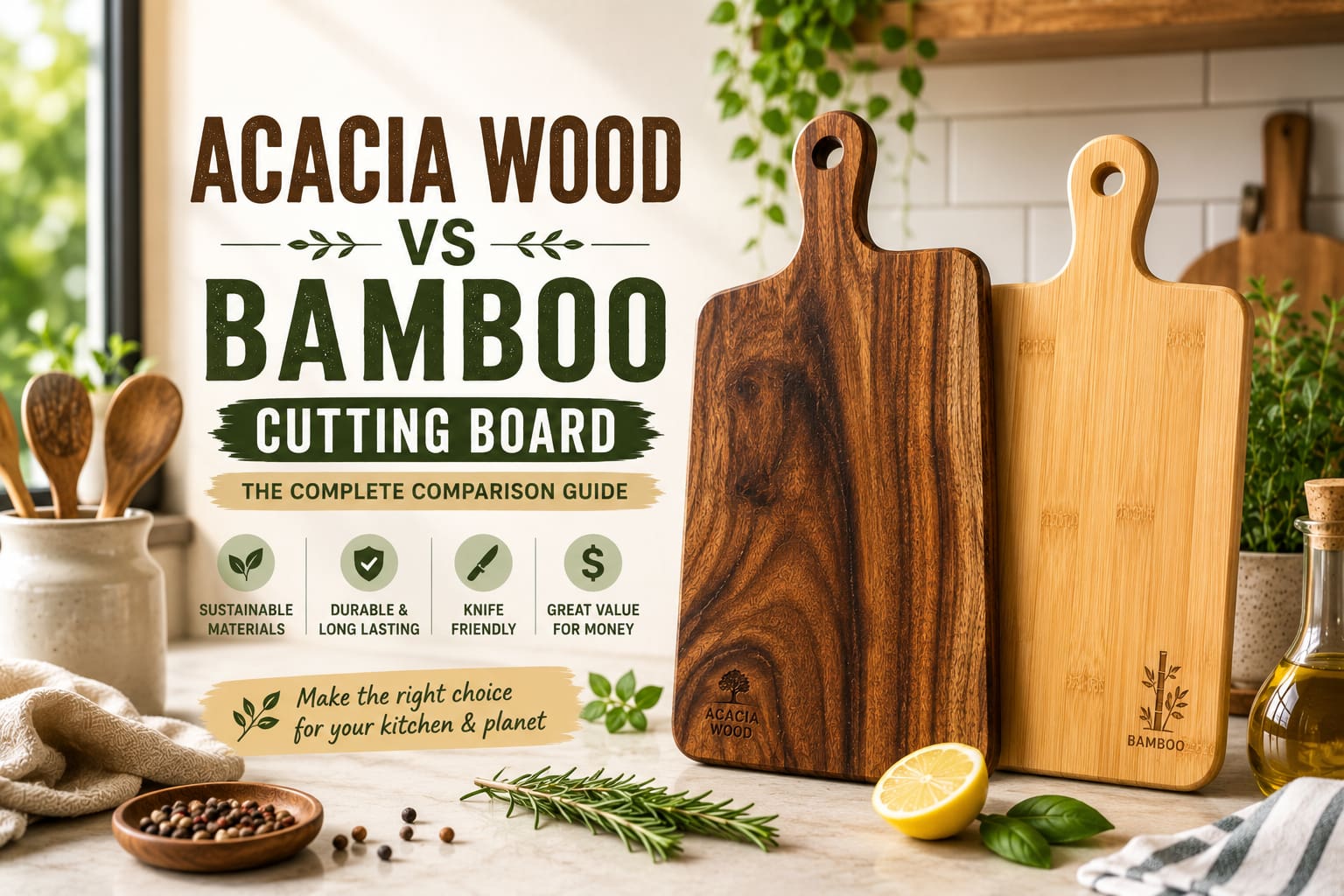
For example, a durable cutting board can be another long-term kitchen choice. Our guide comparing acacia wood vs bamboo cutting boards explores the differences between these two popular materials.
For a wider overview of long-lasting kitchen essentials, you can also explore our guide to sustainable kitchen tools.
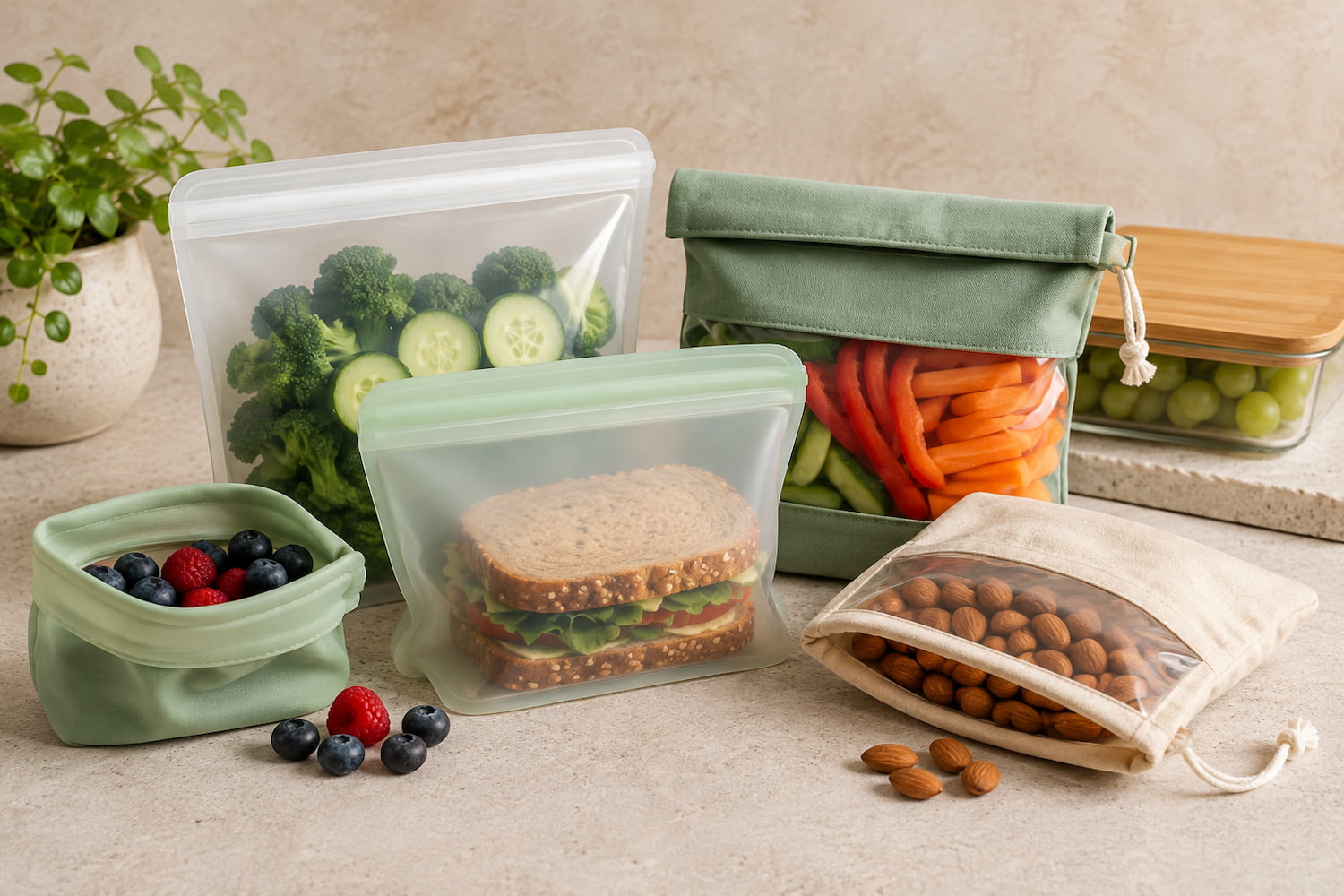
And if you are also reducing single-use packaging for leftovers and groceries, see our guide to eco-friendly food storage bags.
These products serve different purposes, so you do not need to replace everything at the same time.
Are Eco-Friendly Kitchen Towels Worth It?
For most households, eco-friendly kitchen towels can be worth using when they are durable, reusable, and suited to everyday tasks.
Their main value comes from repeated use.
They make the most sense when you:
- Want to reduce reliance on disposable paper products.
- Use a small rotation of washable textiles.
- Choose durable materials.
- Take reasonable care of the towels.
- Avoid replacing products unnecessarily.
They may be less useful if you buy large quantities that remain unused or choose poor-quality products that wear out quickly.
A simple, well-used set is usually more practical than an oversized collection of “sustainable” kitchen products.
Frequently Asked Questions
For many everyday tasks, eco-friendly kitchen towels can reduce reliance on disposable paper towels because they can be washed and reused. However, paper towels may still be useful for certain highly messy tasks.
Organic cotton, linen, and hemp can all be practical options. The best material depends on whether you need softness, absorbency, quick drying, or long-term durability.
They can be worth considering if the towels are well made and likely to be used for a long time. Check the full material information and product construction rather than relying only on the word “organic.”
A small rotation is usually enough. Many households can manage with a few towels for drying, several reusable cleaning cloths, and enough extras to cover the period between laundry loads.
They can replace some functions, especially for countertops and everyday wiping. However, larger eco-friendly kitchen towels may still be more useful for drying dishes and handling larger spills.
Conclusion
Choosing eco-friendly kitchen towels does not have to mean creating a perfect zero-waste kitchen.
A practical approach is to choose durable materials, use towels for a long time, wash them properly, and maintain a manageable rotation.
Start with the kitchen tasks you do most often.
The right reusable towel can become a simple, everyday tool that reduces your dependence on disposable products while making your kitchen routine more practical.
Build your sustainable kitchen gradually, choose products you will genuinely use, and focus on long-term habits rather than buying more.
One thought on “Eco-Friendly Kitchen Towels: How to Choose the Best Ones”