
A dishcloth may be one of the smallest items in your kitchen, but you can use it several times a day. From wiping countertops and cleaning spills to washing dishes, the right cloth can become a practical part of a lower-waste kitchen routine.
An eco-friendly dishcloth is designed for repeated use, not to be thrown away after a single cleaning task. But choosing one is not simply about finding a product with a green label. Material, durability, absorbency, washing requirements, drying time, and end-of-life options all matter.
If you are comparing eco-friendly dishcloths, this guide will help you understand the main types, what to look for, and how to choose an option that fits your everyday kitchen routine.
Table of Contents
What Makes an Eco-Friendly Dishcloth?
An eco-friendly dishcloth is generally a reusable cleaning cloth designed to replace some disposable wipes, paper towels, or short-lived cleaning products.
However, the material alone does not determine whether a dishcloth is a more sustainable choice.
A practical option should ideally be:
- Reusable for repeated cleaning
- Durable enough to withstand regular washing
- Suitable for the jobs you actually need it to perform
- Easy to clean and dry
- Made with clearly identified materials
- Designed to last rather than be frequently replaced
- Reasonably packaged
The most useful way to evaluate sustainability is to consider the product’s whole life cycle rather than relying on a single marketing claim. The U.S. Federal Trade Commission’s Green Guides explain how environmental marketing claims should be supported by specific information.
For example, a reusable cloth that lasts for months or years may be more practical than a cheaper product that quickly falls apart and needs frequent replacement.
Quick Answer: What Is the Best Eco-Friendly Dishcloth?
The best eco-friendly dishcloth depends on how you use it.
For everyday kitchen cleaning, look for a cloth that is:
- Reusable — It should be suitable for repeated use.
- Washable — You should be able to clean it properly between uses.
- Absorbent — It should handle spills without becoming difficult to use.
- Quick enough to dry — Damp cloths can develop unpleasant odors.
- Durable — Strong construction helps reduce frequent replacement.
- Clearly labeled — You should know what materials you are buying.
- Appropriate for the task — A countertop cloth doesn’t need to perform like a dish-drying towel.
For many kitchens, a small rotation of washable cloths is more practical than relying on disposable cleaning products.
Types of Eco-Friendly Dishcloths
No single type of dishcloth works for every kitchen.
Different materials and constructions have different strengths, so consider the cleaning tasks you perform most often.
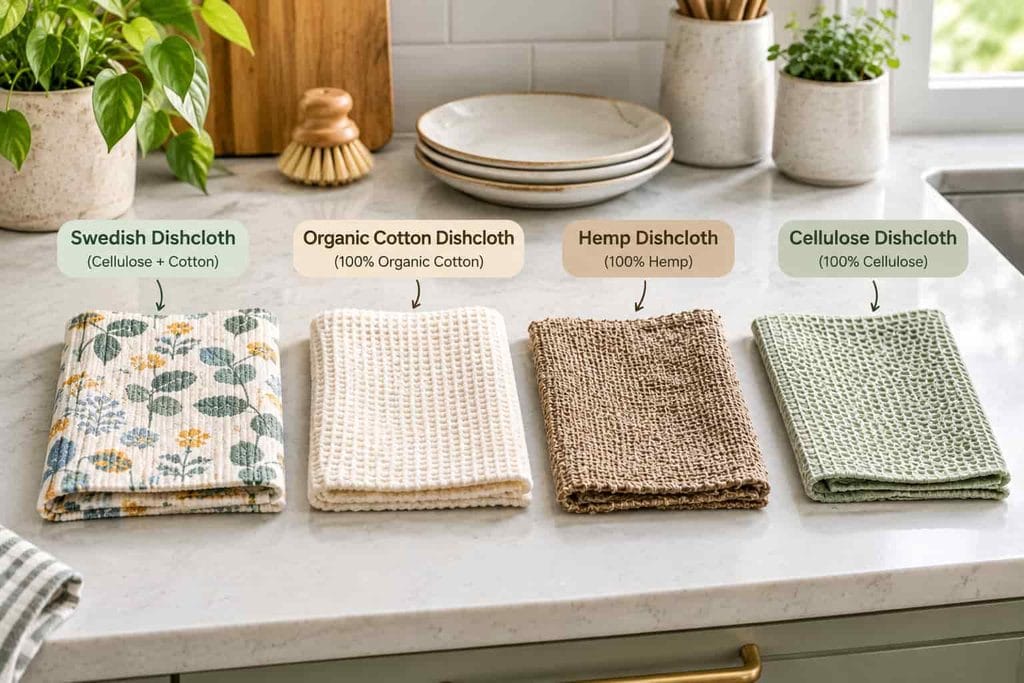
1. Swedish Dishcloth
An eco-friendly Swedish dishcloth is a reusable, absorbent cloth commonly made from a combination of cellulose and cotton.
These cloths are often thin, lightweight, and designed to absorb spills while taking up little storage space.
A Swedish dishcloth can be useful for:
- Wiping countertops
- Cleaning tables
- Handling small spills
- Wiping appliances
- Everyday surface cleaning
One advantage is that it can dry relatively quickly compared with thicker cloths.
If you are specifically looking for a Swedish dishcloth, check the manufacturer’s washing and care instructions because construction and recommended cleaning methods can vary between products.
2. Cotton Dishcloth
Cotton is a familiar material for reusable kitchen textiles.
A cotton dishcloth works well for everyday wiping and cleaning, especially when it has a durable weave and can withstand repeated washing.
When comparing cotton options, consider:
- Fiber composition
- Weave and thickness
- Stitching quality
- Washing instructions
- Drying time
- Expected lifespan
Cotton isn’t automatically more sustainable simply because it is a natural fiber. The product’s durability and how long you actually use it also matter.
3. Hemp Dishcloth
Hemp is another plant-based fiber used in reusable household textiles.
A hemp dishcloth can be appealing if you want a durable natural-fiber option for everyday cleaning.
Look for clear information about the actual fiber composition rather than relying only on terms such as “natural” or “eco.”
4. Cellulose-Based Dishcloths
Cellulose-based cloths are another option worth considering.
Cellulose is a plant-derived material, and some reusable cleaning cloths use cellulose combined with cotton or other fibers.
These cloths can be lightweight and absorbent, making them suitable for everyday surface cleaning.
Always check the product information to understand the exact material blend and disposal instructions.
Eco-Friendly Dishcloth Materials Compared
| Dishcloth Type | Main Strength | Best Use | Care Consideration |
|---|---|---|---|
| Swedish dishcloth | Lightweight and absorbent | Counters and spills | Follow product-specific care instructions |
| Cotton dishcloth | Familiar and versatile | General kitchen cleaning | Regular washing and thorough drying |
| Hemp dishcloth | Durable natural fiber | Repeated everyday use | Follow fiber-specific care instructions |
| Cellulose-based cloth | Lightweight and absorbent | Surface wiping | Check material and end-of-life guidance |
There is no universal winner.
The right choice depends on your cleaning habits, washing routine, storage space, and how long you expect to use the cloth.
Eco-Friendly Dishcloth vs Kitchen Towels
Dishcloths and kitchen towels may look similar, but they are not necessarily designed for the same job.
A dishcloth is generally smaller and more convenient for wiping surfaces, cleaning small spills, and everyday scrubbing or wiping tasks.
A kitchen towel is usually larger and more useful for tasks such as drying dishes, drying hands, or handling larger amounts of water.
This distinction matters because your kitchen may benefit from having both.
For a deeper look at kitchen towel materials, durability, absorbency, and care, see our guide to eco-friendly kitchen towels.
That article focuses specifically on kitchen towels, while this guide focuses on choosing and using dishcloths for everyday cleaning.
How to Choose the Best Eco-Friendly Dishcloth
Choosing the best eco-friendly dishcloth starts with your actual kitchen routine.
1. Start With the Main Job
Think about what you want the cloth to do.
Do you mainly need it for:
- Wiping countertops?
- Cleaning tables?
- Handling spills?
- Washing dishes?
- Wiping appliances?
- Replacing disposable wipes?
A cloth designed for light surface cleaning may not be the best option for heavy-duty scrubbing.
2. Check the Material
Do not choose a cloth based only on the word “eco-friendly.”
Look for specific information about:
- Fiber composition
- Material blends
- Manufacturing information
- Washing instructions
- Expected durability
Clear product information makes it easier to compare different options.
3. Consider Absorbency
A good dishcloth should absorb enough moisture for your typical cleaning tasks without becoming unnecessarily bulky.
If you frequently clean spills, absorbency may matter more than appearance.
For quick countertop wipe-downs, a thinner cloth may be easier to handle.
4. Look at Durability
A reusable product only makes sense when you actually reuse it.
Check for:
- Strong edges
- Secure stitching
- Durable fabric
- Resistance to fraying
- Clear care instructions
A durable cloth can stay in your kitchen routine longer and reduce the need for frequent replacements.
5. Think About Drying Time
A dishcloth that stays wet for long periods may be inconvenient.
After use, squeeze out excess water and hang or place the cloth somewhere with enough airflow to dry.
Quick drying can make a noticeable difference when you use the same type of cloth throughout the day.
6. Check the Care Instructions
Before buying several cloths, make sure the recommended cleaning method fits your routine.
If you prefer machine washing, choose a product designed for it.
If the manufacturer recommends a specific washing temperature or method, follow those instructions rather than assuming every reusable cloth can be treated the same way.
7. Consider the End of Its Useful Life
Eventually, even a durable dishcloth will wear out.
Before purchasing, check whether the manufacturer provides information on disposal, compostability, or recycling where applicable.
Don’t assume that a product is compostable simply because it contains a plant-based material.
How to Wash and Care for a Reusable Dishcloth
Proper care helps a reusable dishcloth last longer.
1. Rinse After Use
Remove food particles and visible residue after cleaning.
Do not leave a heavily soiled cloth sitting wet in the sink.
2. Let It Dry Completely
After rinsing, squeeze out excess water and allow the cloth to dry in an airy location.
Avoid storing damp cloths in a closed container or leaving them in a wet pile.
3. Wash Regularly
How frequently you wash a cloth depends on what you use it for.
A cloth used for food spills or heavy cleaning may need more frequent washing than one used briefly on a clean countertop.
Always follow the product’s care label.
4. Replace When It No Longer Performs Properly
Fading alone does not necessarily mean a cloth is unusable.
However, consider replacing it when it becomes:
- Permanently stained with food residue.
- Strongly odorous despite proper washing
- Frayed or damaged
- Difficult to clean
- Unable to absorb or wipe effectively
Before disposal, you can reuse a worn dishcloth for lighter cleaning tasks.
How to Wash a Swedish Dishcloth
If you are wondering how to wash a Swedish dishcloth, start with the manufacturer’s instructions because care recommendations vary.
For many products, basic care involves:
- Rinsing the cloth after use.
- Removing excess water.
- Allowing it to air-dry completely.
- Washing it according to the product’s recommended method.
- Replacing it when it becomes worn or no longer cleans effectively.
Don’t assume that every Swedish dishcloth has identical washing instructions.
The product label is the best reference for temperature, washing method, and drying requirements.
Common Mistakes to Avoid
Choosing a sustainable product is only part of the process.
Avoid these common mistakes:
Buying Only Because It Says “Eco-Friendly”
A green label does not tell you everything about a product.
Look for details on materials, durability, care, and disposal information.
When comparing products, look for specific information about materials and environmental attributes rather than relying on a broad environmental label. The FTC provides consumer guidance for understanding common green marketing claims.
Buying Too Many
You do not need a huge collection of dishcloths.
A smaller rotation is easier to wash, dry, store, and actually use.
Leaving Cloths Wet
Reusable cloths still need proper care.
Allowing them to dry between uses can make your routine more hygienic and help prevent unpleasant odors.
Using One Cloth for Everything
Consider separating cloths by purpose.
For example, you may prefer one set for general surface cleaning and another for messier kitchen tasks.
Replacing Usable Cloths Too Quickly
A cloth doesn’t become waste simply because it is no longer attractive.
If it still performs well, continue using it.
When it’s no longer suitable for food-related cleaning, consider using it for another household cleaning task.
Are Eco-Friendly Dishcloths Worth It?
For households that regularly use disposable wipes or paper products for everyday kitchen cleaning, reusable dishcloths can be a practical lower-waste alternative.
Their value comes primarily from repeated use.
A durable cloth that you wash and use many times can fit naturally into a sustainable kitchen routine.
However, sustainability is not just about buying a reusable product. The way you use, wash, dry, maintain, and eventually dispose of it also matters.
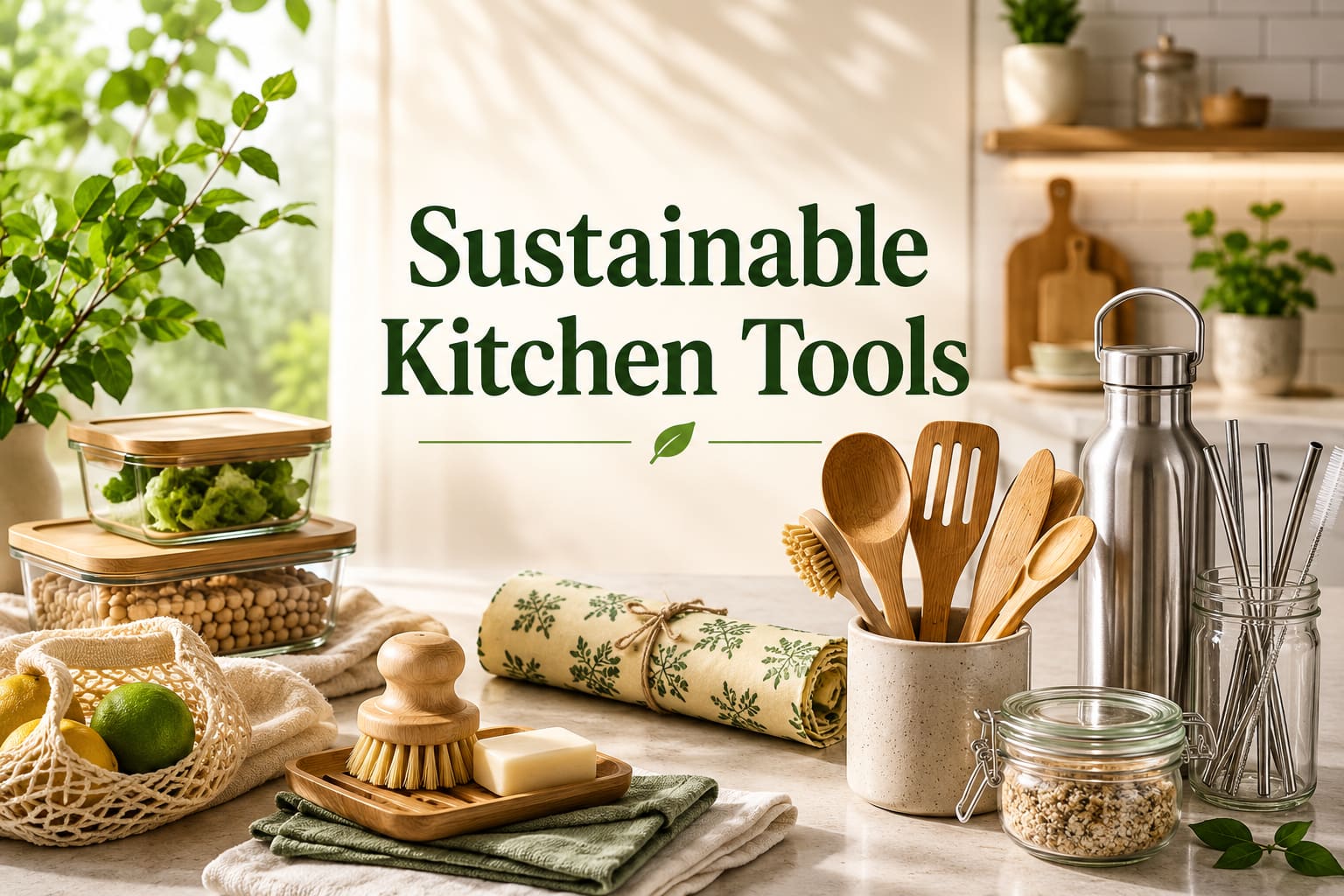
If you are building your kitchen around reusable products, our Sustainable Kitchen Tools guide covers broader reusable kitchen essentials. The dishcloth is a more focused cleaning swap within that larger category.
For food-storage swaps rather than cleaning products, see our Eco-Friendly Food Storage Bags guide.
Frequently Asked Questions
No single dishcloth is best for every household. Look for a durable, washable, reusable cloth made from clearly identified materials and choose one that you will use repeatedly.
Swedish dishcloths can be a lower-waste option when they are reused many times and cared for properly. Their environmental benefits depend on their materials, lifespan, washing routine, and eventual disposal.
Lifespan varies by material, construction, usage frequency, and washing routine. Instead of relying on a fixed number, look for signs of damage, persistent odor, poor absorbency, or reduced cleaning performance.
Some reusable dishcloths are machine washable, while others have different care requirements. Always check the manufacturer’s instructions before putting a cloth in the washing machine.
Wash it based on how heavily you use it and what it has cleaned. Cloths exposed to food residue, grease, or heavier messes generally need more frequent washing than those used briefly for light surface cleaning.
Conclusion
An eco-friendly dishcloth can be a simple addition to a lower-waste kitchen without requiring a major lifestyle change.
The best option is not necessarily the one with the most impressive environmental claim. Instead, look for a reusable dishcloth that fits your cleaning routine, has clearly identified materials, washes well, dries well, and remains useful through repeated use.
Whether you choose a Swedish dishcloth, cotton cloth, hemp option, or another reusable design, focus on durability, care, and actual long-term use.
Start with a small rotation rather than buying more than you need. A practical dishcloth that becomes part of your everyday routine can be a more useful, sustainable swap than a product that simply looks eco-friendly on the package.
2 thoughts on “Eco-Friendly Dishcloth: 4 Types and How to Choose the Best One”