
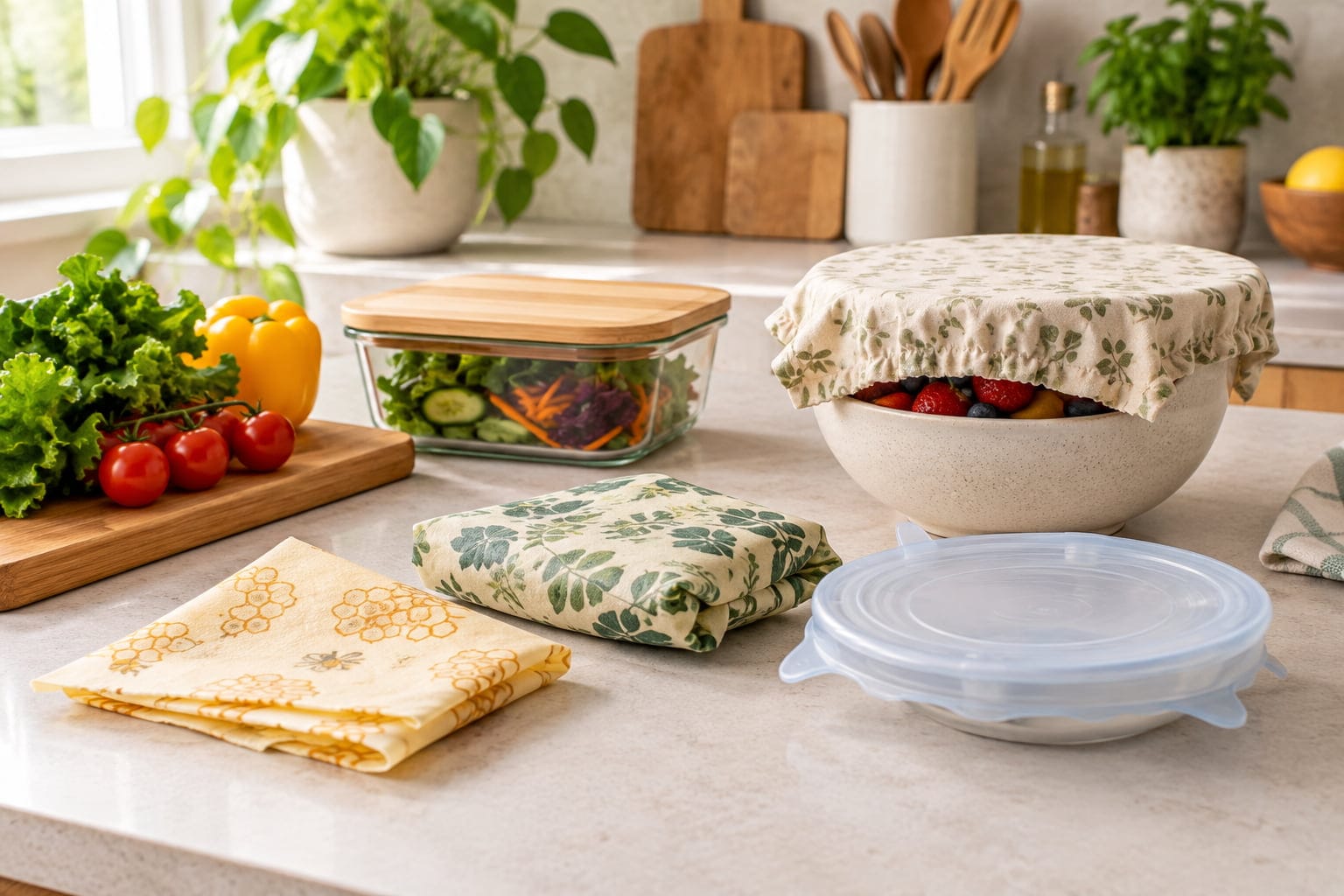
Plastic wrap is convenient, but using it once and throwing it away creates unnecessary waste over time. If you want to make your kitchen more sustainable, switching to eco-friendly food wrap is a simple place to start.
From beeswax wraps and plant-based alternatives to reusable silicone covers, there are several ways to keep food fresh without relying on conventional cling film. The right option depends on what you are storing, how often you will reuse it, and how much care you are willing to provide.
This guide explains the main types of sustainable food wrap, how they compare with disposable plastic wrap, what to look for when shopping, and how to use and care for reusable options.
Table of Contents
What Is Sustainable Food Wrap?
Sustainable food wrap refers to reusable, lower-waste, or responsibly designed materials used to cover and protect food as an alternative to conventional single-use plastic wrap.
Unlike disposable cling film, many reusable food wraps can be washed and used repeatedly. Depending on the product, they may be made from cotton coated with beeswax, plant-based wax, silicone, or other food-contact materials.
The goal is not simply to find a product labeled “eco-friendly.” A more sustainable option should also be durable, practical for regular use, and suitable for the foods you typically store.
Quick Answer
The best sustainable food wrap is one that you can safely use, clean, and reuse regularly. Beeswax wraps work well for many cold foods, while silicone wraps and reusable covers can offer more versatility for different storage needs.
Why Switch From Plastic Wrap?
Traditional plastic wrap is designed primarily for short-term use. Once it has covered a bowl, sandwich, or piece of produce, it is often discarded.
Switching to reusable food wrap alternatives can help reduce your dependence on single-use products.
Potential benefits include:
- Less reliance on disposable plastic wrap
- Repeated use instead of one-time use
- Fewer single-use items in your kitchen waste
- More practical reusable storage habits
- A wider choice of materials and designs
However, reusable does not automatically mean sustainable in every situation. A wrap that is difficult to clean or rarely reused may not provide the practical benefits you expect.
The most useful swap fits naturally into your everyday routine.
Reducing your reliance on single-use products can be part of a broader strategy for preventing waste at home.
Types of Sustainable Food Wrap
There is no single type of sustainable food wrap that works for every kitchen. Different materials have different strengths, limitations, and care requirements.
Here are the most common options.
Beeswax Food Wraps
Beeswax wraps are cotton fabric coated with beeswax and other ingredients such as plant oils or tree resin, depending on the product.
The warmth of your hands can help soften the material so it molds around food or the edge of a container.
They can be useful for:
- Covering cut fruits and vegetables
- Wrapping sandwiches
- Covering bowls
- Storing bread
- Protecting snacks
Beeswax wraps are generally intended for cool or room-temperature foods. Do not treat them like conventional plastic wrap for hot foods.
They also require regular cleaning and should be allowed to dry completely between uses.
Plant-Based and Vegan Wax Wraps
If you want a vegan alternative to beeswax, some reusable wraps use plant-based waxes or other coatings.
These products offer a similar concept: a flexible fabric that wraps around food or containers and can be reused after cleaning.
When comparing sustainable food wrappers, check the actual material list rather than relying only on terms such as “natural” or “green.”
Look for information about:
- The fabric used
- The coating ingredients
- Food-contact suitability
- Cleaning instructions
- Expected lifespan
- End-of-life instructions
A transparent materials list makes it easier to understand what you are buying.
Reusable Silicone Food Wrap
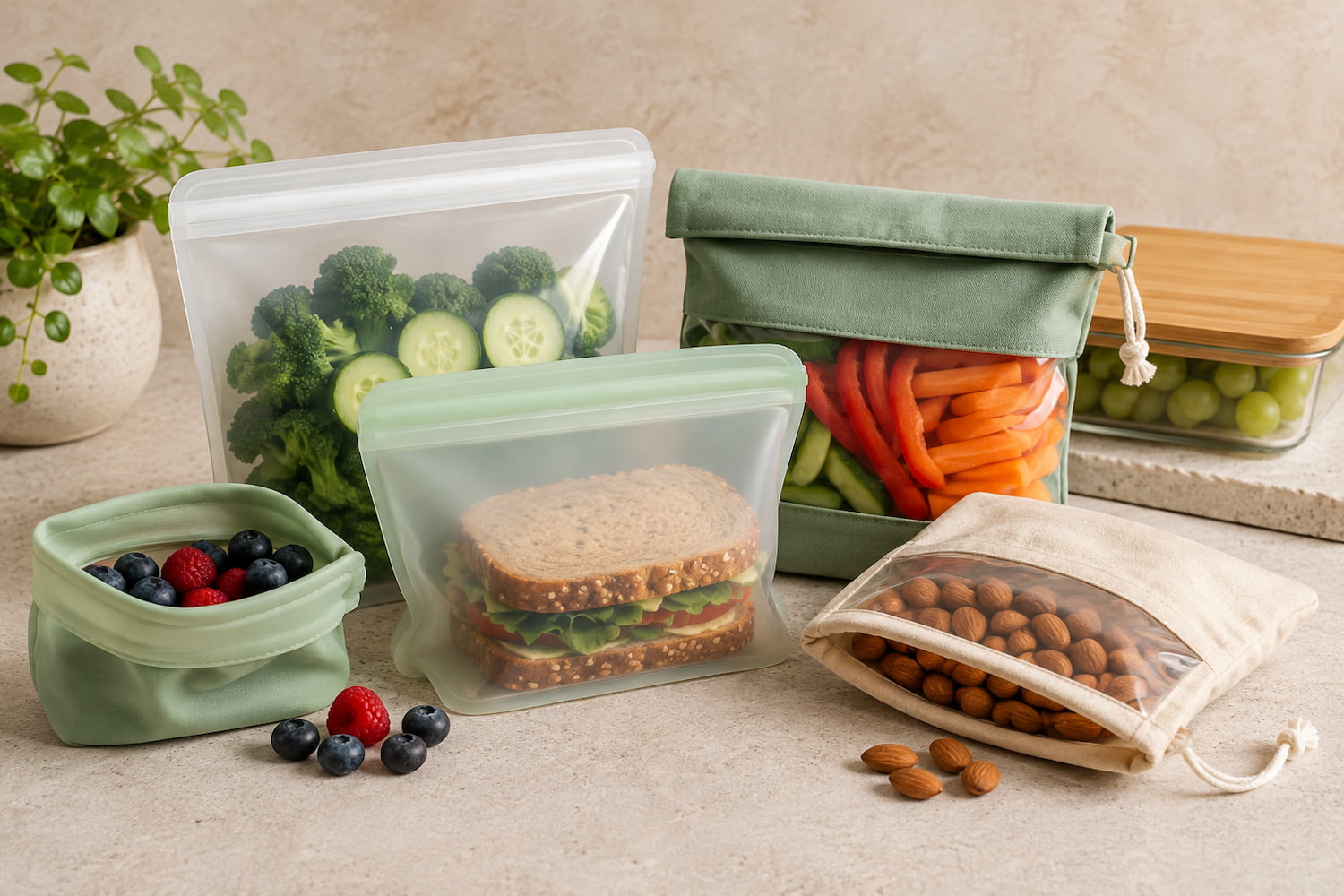
Reusable silicone wraps offer a flexible alternative to disposable cling film for households.
Depending on the design, silicone products may stretch over bowls, cover cut produce, or create a seal around containers.
Some silicone products are also designed for freezer or heat-related applications, but this varies significantly by product.
Always check the manufacturer’s instructions before using sustainable food wrap with hot food, in a microwave, oven, dishwasher, or freezer.
Silicone is especially useful when you want a washable option that can handle moisture and repeated everyday use.
Reusable Bowl Covers
Reusable bowl covers are designed to cover containers, bowls, plates, or dishes.
They can be made from washable fabric, silicone, or other reusable materials.
These covers are particularly useful when you frequently:
- Cover leftovers
- Store prepared food
- Refrigerate bowls
- Protect cut produce
- Cover serving dishes
Their main advantage is convenience. Instead of cutting a new piece of plastic wrap every time you need to cover a bowl, you can wash and reuse the same cover.
Sustainable Food Wrapping Paper
Another category includes paper-based or plant-based sustainable food wrapping paper products.
These can be useful when you specifically need a disposable wrapping option, such as for sandwiches, baked goods, or food being transported.
However, “paper” does not automatically mean environmentally preferable. Coatings, inks, additives, manufacturing, and disposal can all affect the overall environmental impact.
If you choose a disposable paper-based option, check whether the product is recyclable, compostable, or intended for another disposal method. Follow the manufacturer’s instructions rather than assuming it belongs in your household compost or recycling bin.
How to Choose the Right Food Wrap
Choosing sustainable food wrap becomes easier when you start with your actual kitchen habits rather than the material alone.
1. Think About What You Store
Different foods call for different storage solutions.
For example:
- Sandwiches: Beeswax or plant-based wraps
- Cut produce: Reusable wraps or fitted covers
- Bowls: Reusable bowl covers
- Moist foods: Washable, moisture-resistant options
- Cold leftovers: Silicone covers or reusable wraps
- Dry snacks: Fabric-based wrapping options
The right choice depends on the food, temperature, moisture level, and storage time.
2. Check Food-Contact Safety
Choose products specifically designed for food contact.
Do not assume that a material is food-safe simply because it is described as natural, reusable, or sustainable.
Before using a product, check:
- Food-contact information
- Temperature limits
- Cleaning instructions
- Microwave or freezer suitability
- Manufacturer warnings
This is particularly important if you plan to use the wrap with warm or frozen foods.
3. Consider Cleaning Requirements
A reusable product only works as a practical, sustainable swap if you are willing to clean it.
Ask yourself:
- Is it easy to wash?
- Can you reach all surfaces?
- Does it dry quickly?
- Can it be stored easily?
- Will the material retain odors?
A product that fits your normal kitchen routine is more likely to be reused consistently.
4. Look at Durability
Durability matters because frequent replacement can reduce a reusable product’s practical value.
Look for a wrap that:
- Holds its shape
- Does not easily tear
- Maintains its sealing ability
- Can withstand regular washing
- Has clear care instructions
You do not necessarily need the most expensive product. Focus on quality and realistic long-term use.
Sustainable Food Wrap vs. Plastic Wrap
Both options can cover food, but they work differently.
| Feature | Sustainable Food Wrap | Conventional Plastic Wrap |
|---|---|---|
| Reusability | Often reusable | Usually single-use |
| Waste | Can reduce repeated disposable waste | Creates waste after use |
| Cleaning | Usually required | No cleaning required |
| Initial cost | Usually higher | Usually lower |
| Long-term use | Designed for repeated use | Designed for short-term use |
| Material choices | Waxed fabric, silicone, covers, paper options | Usually plastic film |
| Convenience | Depends on product | Very convenient |
The biggest difference is the reuse model.
With disposable plastic wrap, convenience comes from using a new piece whenever you need it. With reusable, sustainable food wrap, the goal is to reuse the same item while cleaning and maintaining it properly.
Neither option is suitable for every situation, so your food-storage habits should guide your choice.
How to Use and Care for Reusable Food Wrap
Proper care can help reusable wraps last longer.
Follow the Manufacturer’s Instructions
Different materials require different cleaning methods.
Some wraps may be suitable for gentle hand washing, while others have specific temperature or cleaning restrictions.
Always follow the instructions supplied with the product.
For perishable foods and leftovers, follow recommended refrigeration and food-safety practices rather than relying on the wrap alone.
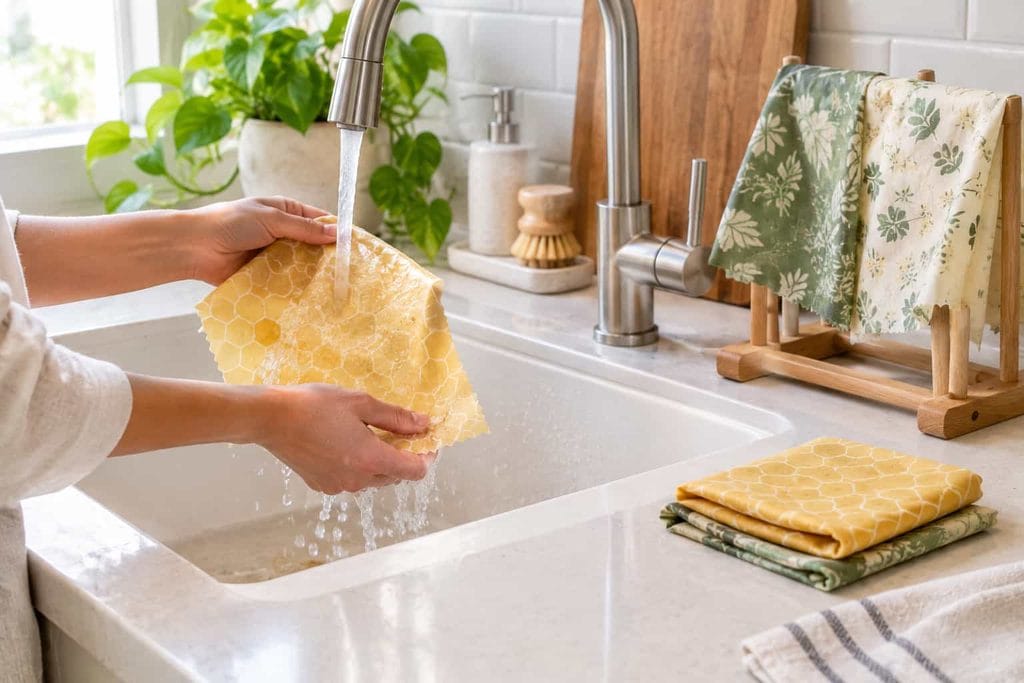
Wash After Use
Remove food residue promptly and wash the wrap using the recommended method.
For many reusable products, gentle washing with mild dish soap and water is sufficient, but the exact method depends on the material.
Avoid harsh cleaners or high temperatures unless the manufacturer specifically says they are safe.
Let It Dry Completely
Drying is just as important as washing.
After cleaning:
- Rinse away any remaining soap.
- Shake off excess water.
- Hang or lay the wrap flat as recommended.
- Allow it to dry completely.
- Store it in a clean, dry place.
Avoid folding and storing a damp wrap.
Know When to Replace It
Reusable does not mean permanent.
Replace a wrap when it becomes damaged, develops persistent odors, loses its intended function, or can no longer be cleaned effectively.
Continuing to use a damaged food-contact product simply because it is reusable is not a good trade-off.
Common Mistakes to Avoid
A few mistakes can make reusable food wraps less convenient than they need to be.
Using the Wrong Wrap for Hot Food
Not every reusable wrap can handle heat. Check temperature limits before covering warm food.
Ignoring Cleaning Instructions
Different materials have different care requirements. Following the manufacturer’s instructions can help protect the product and extend its useful life.
Storing the Wrap While Damp
Moisture trapped during storage can contribute to odors and make the product unpleasant to reuse.
Buying More Than You Need
Sustainable living is not about collecting every reusable product available.
Start with the food wrap alternative that solves a problem you already have.
Choosing a Product Only Because It Says “Eco-Friendly”
Marketing language is not enough.
Consider the material, durability, expected lifespan, care requirements, and disposal information before you decide.
Marketing terms such as “eco-friendly” should not be your only reason for choosing a product; look for specific information about materials, use, and disposal.
Are Sustainable Food Wraps Worth It?
For many households, sustainable food wrap can be a practical way to reduce repeated use of disposable plastic wrap.
The biggest advantage is reuse. Instead of cutting a fresh piece of cling film each time you cover food, you can clean and reuse a suitable wrap or cover.
However, the best option depends on your habits.
A sustainable food wrap is more likely to be useful when you:
- Use it regularly
- Choose the right size and material.
- Clean it properly
- Allow it to dry completely.
- Follow temperature restrictions
- Keep using it for as long as it remains functional.
You don’t need to replace every disposable product in your kitchen at once. Start with the plastic wrap you use most frequently and make one practical swap at a time.
If you are building a broader low-waste kitchen, see our guide to sustainable kitchen tools for additional reusable kitchen ideas.
For another type of food-storage swap, our guide to eco-friendly food storage bags focuses specifically on reusable bags rather than food wraps.
Frequently Asked Questions
The most sustainable option depends on how often you use it, how long it lasts, how you clean it, and what happens at the end of its useful life. A durable reusable wrap that fits your routine can be a practical choice.
Common sustainable plastic wrap alternatives include beeswax wraps, plant-based wax wraps, reusable silicone wraps, reusable bowl covers, and some paper-based options. The best choice depends on the food and storage conditions.
Beeswax wraps can reduce reliance on single-use plastic wrap because you can wash and reuse them. However, they have specific care and temperature limitations and do not suit every food-storage situation.
Many reusable wraps can be used for refrigerated food, but suitability depends on the product. Always check the manufacturer’s instructions for food-contact and temperature guidance before use.
Cleaning depends on the material. Many reusable wraps can be gently washed according to the manufacturer’s instructions and then allowed to dry completely before storage. Avoid cleaning methods not approved for the product.
Conclusion
Switching to sustainable food wraps can be a simple way to reduce your dependence on single-use plastic without giving up convenient food storage.
From beeswax and plant-based wraps to reusable silicone covers and bowl covers, different options can serve different kitchen needs. The best choice is not necessarily the one with the most eco-friendly-sounding label. Instead, look for a product that is food-safe, durable, easy to clean, and realistic for your daily routine.
If you are ready to reduce disposable plastic in your kitchen, start with the type of wrap you use most often. Choose one reusable option, use it consistently, and build from there.
For more practical ideas, explore ReusableHub’s Eco Kitchen guides and discover simple swaps that can make everyday kitchen routines more reusable and less wasteful.
2 thoughts on “Sustainable Food Wrap: Eco-Friendly Alternatives to Plastic Wrap”