
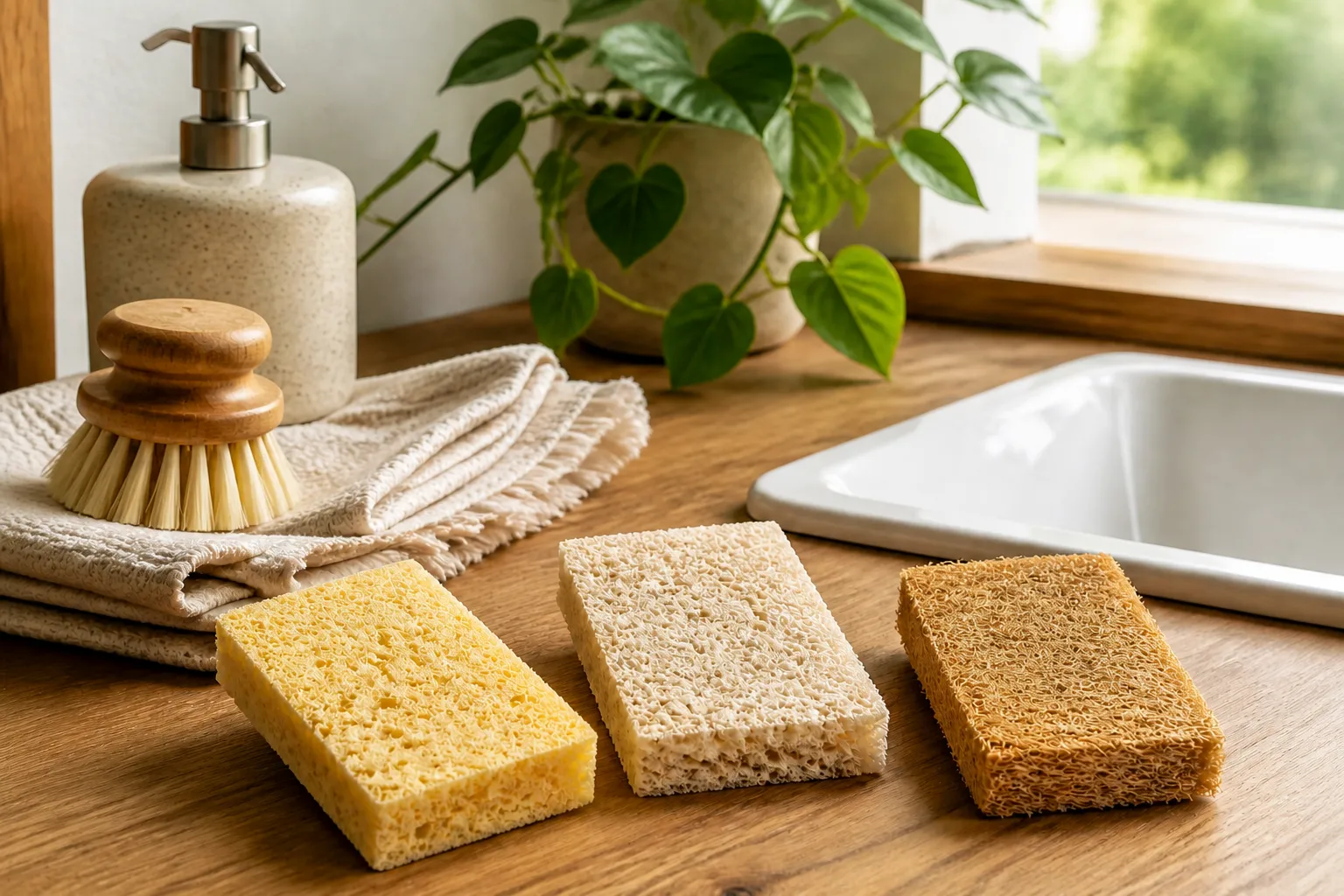
Regular kitchen sponges may look harmless, but many are made from plastic foam and synthetic fibers. They wear down over time and usually end up in the trash. To reduce plastic waste, switching to compostable sponges is a simple kitchen change worth considering. Natural cellulose and loofah sponges offer practical alternatives for everyday dishwashing, wiping counters, and cleaning sinks. I prefer eco-friendly swaps that are easy to use and maintain, rather than products that make sustainability feel complicated. In this guide, we’ll compare three plant-based sponge options, review their materials, and explain what to know before composting them.
If you’re making more eco-friendly changes, explore these sustainable kitchen tools for other practical ways to reduce waste.
Table of Contents
What Is a Zero Waste Kitchen Sponge?
A zero waste kitchen sponge is a cleaning tool designed to reduce waste by using reusable or plant-based materials instead of conventional plastic foam.
Many eco-friendly kitchen sponges are made from cellulose, a plant-derived fiber, or loofah, a natural material obtained from the fibrous inside of a mature gourd. These materials can absorb water and help clean dishes, countertops, and kitchen surfaces.
However, plant-based does not automatically mean compostable. Some sponges contain synthetic scrub layers, plastic mesh, adhesives, or other materials that may prevent them from breaking down in compost.
Before buying compostable sponges, check:
- The complete material list
- Whether the sponge contains synthetic fibers
- The manufacturer’s composting instructions
- Whether it is home-compostable or only suitable for commercial composting
- Whether the compostability claim has third-party certification
These details matter because the goal is to reduce waste without accidentally sending plastic into your compost pile.
You can also cut down on disposable kitchen waste by switching to eco-friendly kitchen towels.
3 Best Compostable Sponges for an Eco Kitchen
These three options use plant-based materials and are listed by US retailers. Prices and inventory can change, so check the product page before purchasing.
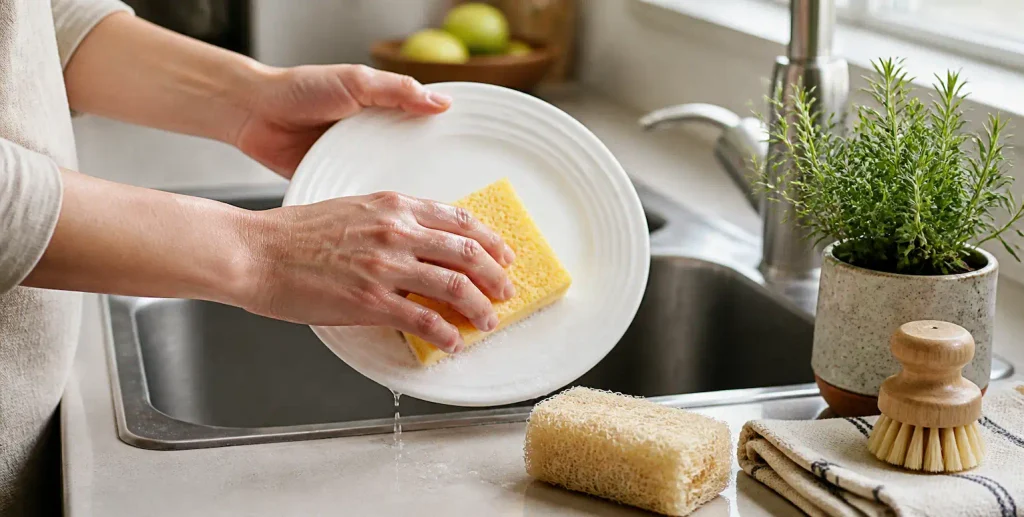
1. Plastno Soak Sponge
Best for: Everyday dishwashing and countertop cleaning
The Plastno Soak Sponge is made from 100% cellulose. It arrives compressed and expands when it comes into contact with water.
The sponge has a simple, single-layer design without a synthetic scrub pad. This makes it a useful option for washing dishes, wiping counters, and cleaning everyday kitchen messes.
Check the Plastno Soak Sponge product page for current pricing, materials, and care instructions.
Key features:
- Made from plant-based cellulose
- No polyurethane foam or plastic scrub layer listed
- Expands when wet
- Suitable for dishes and countertops
- Can be boiled or cleaned in the top rack of a dishwasher, according to the brand
- Comes in a three-pack
Price and availability: The product page currently lists the three-pack at $12. The product is listed on the brand’s website, that ships across the United States. Confirm inventory and shipping at checkout.
One important detail: Plastno describes its sponge as biodegradable and suitable for home composting, but its FAQ states that the sponge line is not third-party certified compostable. That distinction is worth knowing if you are looking specifically for certified compostable products.
My take: This is a practical option if you want a basic cellulose sponge without a plastic scrub layer. It may not be abrasive enough for heavily burnt food, so keep a separate scrubber for tougher jobs.
2. Silver Falls Sustainability Co. Plant-Based Sponges
Best for: A simple cellulose sponge from a US retailer
Silver Falls Sustainability Co. offers compressed plant-based sponges made from renewable cellulose fiber. They arrive flat and expand when wet, making them easy to store before use.
The retailer describes them as suitable for everyday dishwashing and household cleaning. Their simple cellulose construction makes them an alternative to traditional plastic foam sponges.
See the Silver Falls compostable cellulose sponges for product details and pack options.
Key features:
- Made from renewable cellulose fiber
- Compressed packaging
- Expands when wet
- Designed for everyday dishwashing
- Available individually or in a four-pack
- Retailer describes them as compostable.
Price and availability: Exist Green lists the sponges at approximately $2 per sponge, with single and four-pack options. The listing states that the product ships within the US and offers store pickup or local delivery.
As with any compostability claim, check the product’s current instructions before putting it into a compost pile. Retailer descriptions are not the same as independent certification.
My take: This is worth considering if you want a basic plant-based sponge and prefer purchasing from a US-based sustainability retailer. It is a straightforward choice for everyday cleaning rather than heavy-duty scrubbing.
3. What’s Good Natural Loofah Sponges
Best for: Natural scrubbing texture
If you prefer a firmer sponge, natural loofah is another option. What’s Good sells a three-pack of kitchen loofah sponges made from 100% loofah and sewn with 100% cotton thread.
Loofah comes from a plant, rather than being made from the plastic mesh used in many conventional scrubbers. It offers a textured surface for washing dishes and cleaning everyday food residue.
Check the natural loofah kitchen sponges for current price and availability.
Key features:
- Made from 100% natural loofah
- Sewn with cotton thread
- No synthetic foam or plastic scrub layer listed
- Reusable and washable
- Top-rack dishwasher safe, according to the retailer
- Retailer describes the sponges as compostable.
Price and availability: What’s Good lists the three-pack at $7.98. The product page displays pickup information, but availability may vary by location. Check the retailer’s current shipping or pickup options before ordering.
Loofah can feel rougher than cellulose, so use it carefully on delicate cookware and finishes. Rinse it well and allow it to dry completely between uses.
My take: Natural loofah is a good alternative if you want more texture without a synthetic scrub layer. It may work well alongside a soft cellulose sponge, giving you separate tools for different cleaning jobs.
Compostable vs. Regular Sponge: What’s the Real Difference?
The main difference is the material used to make the sponge and how it can be disposed of at the end of its useful life.
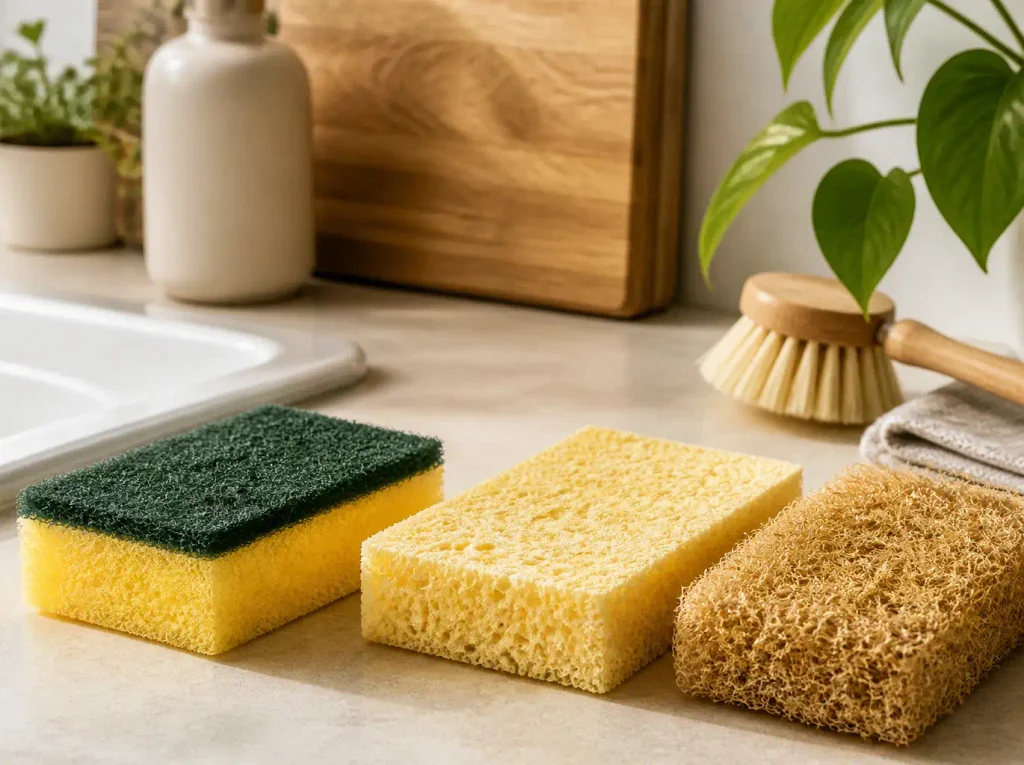
Many conventional kitchen sponges contain polyurethane foam, polyester, nylon, or other synthetic materials. These materials are generally unsuitable for home composting.
Plant-based sponges may use cellulose or loofah instead. However, the entire product needs to be considered—not just its main sponge material.
| Feature | Regular kitchen sponge | Plant-based compostable sponge |
|---|---|---|
| Common materials | Plastic foam, synthetic fibers | Cellulose, loofah |
| Plastic content | Often contains plastic | May be plastic-free |
| Absorbency | Varies by product | Cellulose is highly absorbent |
| Scrubbing texture | Often synthetic scrub layer | Depends on material |
| Composting | Usually not suitable | Depends on product and composting instructions |
| End of life | Usually household trash | May be compostable if materials qualify |
Not all plant-based sponges are certified compostable. Some brands use the terms biodegradable and compostable differently, so always check the product’s disposal instructions.
How to Compost Your Kitchen Sponge Properly
Buying compostable sponges is only one part of reducing kitchen waste. Proper disposal is just as important.
1. Check the material list
Look for cellulose, natural loofah, and other compostable plant fibers. Check whether the sponge contains synthetic scrub layers, plastic threads, coatings, or adhesives.
2. Remove non-compostable parts
If the sponge has a plastic label, synthetic loop, or removable plastic component, remove it before composting if possible.
3. Rinse the sponge
Remove food particles, grease, and soap residue. Avoid composting a sponge that is heavily contaminated with chemicals or cleaning products.
4. Cut it into smaller pieces
Cutting a worn sponge into small pieces can help it mix into the compost and break down more easily.
5. Check your composting system
Follow the manufacturer’s instructions. Some products may be suitable for home composting, while others require commercial composting.
Your local composting service may not accept kitchen sponges, even if the product is marketed as compostable.
6. Never litter
Compostable does not mean you can leave a sponge outdoors or throw it into a waterway. It needs appropriate composting conditions to break down.
Final Verdict: Which One Should You Choose?
The best option depends on your cleaning routine and your preferred texture.
- Plastno Soak Sponge: A simple cellulose option for everyday dishes and countertops. The brand describes it as biodegradable but not certified compostable by a third-party certifier .
- Silver Falls Sustainability Co. Plant-Based Sponge: A cellulose sponge listed by a US retailer with shipping options.
- What’s Good Natural Loofah Sponge: A natural loofah option if you prefer a firmer scrubbing texture.
I would start with one sponge that suits your daily routine instead of buying several at once. Cellulose is useful for everyday cleaning, while loofah offers a more textured surface.
Remember that compostable sponges still need proper care. Rinse them after use, let them dry between uses, and replace them when they start to fall apart or develop a persistent odor.
A small kitchen swap may not eliminate all household waste, but choosing suitable plant-based cleaning tools can be one practical step toward a lower-plastic kitchen.
For more plastic-free kitchen swaps, check out these eco-friendly food storage bags and sustainable food wrap alternatives.
Frequently Asked Questions
Cellulose and natural loofah sponges are commonly sold for dishwashing. Use them according to the manufacturer’s instructions, rinse them thoroughly, and let them dry between uses.
Replacement depends on the material, how often you use the sponge, and how well you care for it. Replace it when it starts breaking apart, develops a persistent odor, or no longer cleans properly. Follow the brand’s care instructions.
4 thoughts on “3 Best Compostable Sponges That Actually Work for a Zero Waste Kitchen”