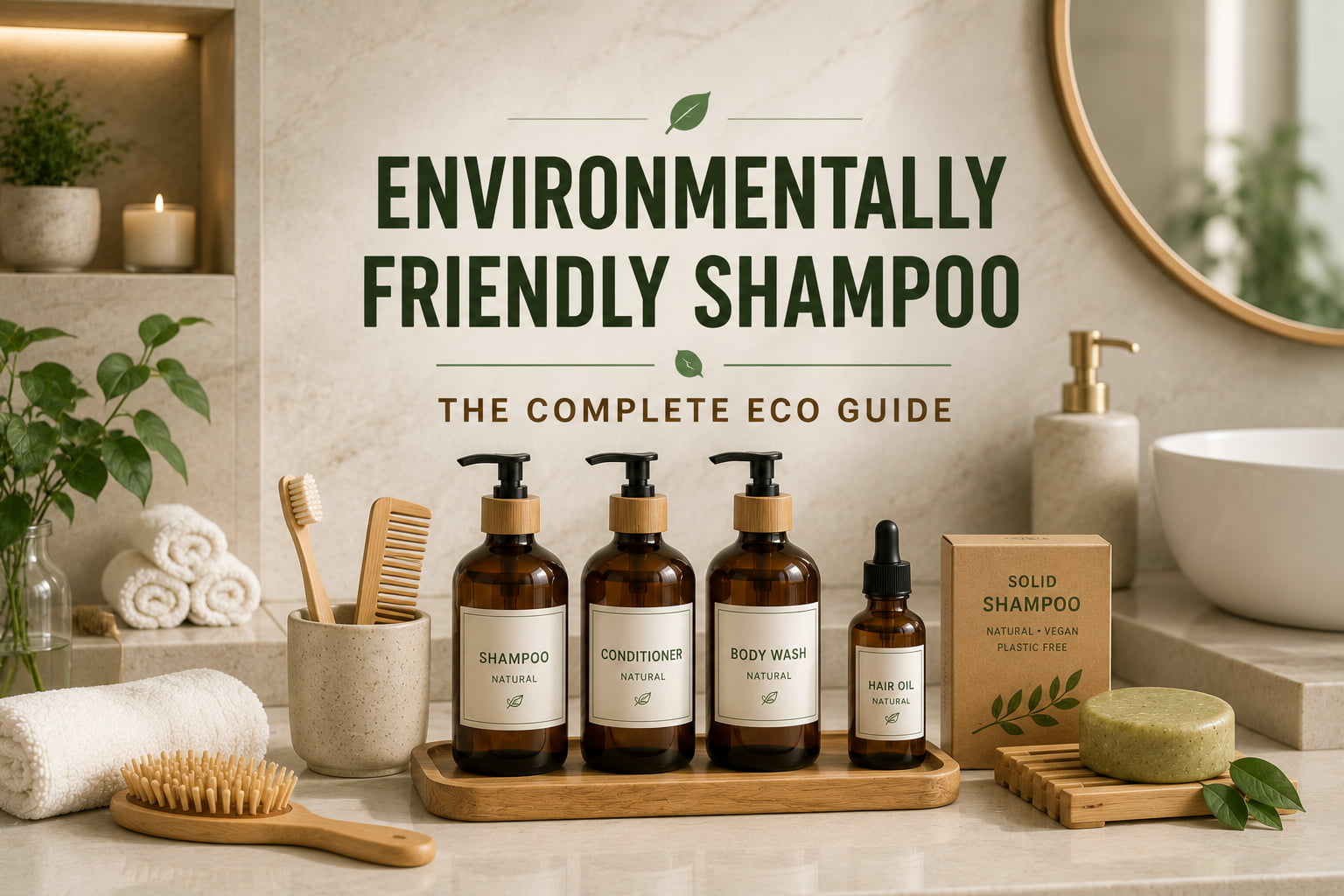
Introduction
Your hair-care routine may look simple, but the products you use, the packaging you buy, and the habits you follow can create a surprising amount of waste over time.
The good news is that eco-friendly hair care does not mean giving up convenience or completely replacing everything in your bathroom. It is about making smarter choices that fit your routine while reducing unnecessary waste.
From reusable accessories and concentrated formulas to thoughtful purchasing and better product care, small changes can make your routine more sustainable without the hassle.
In this guide, we will look at practical ways to create a more environmentally conscious hair-care routine, how to choose sustainable products, and which everyday habits can make the biggest difference.
Table of Contents
What Does Eco-Friendly Hair Care Mean?
Eco-friendly hair care means approaching hair care with greater attention to waste, packaging, product longevity, resource use, and purchasing habits.
It is not about finding a single “perfect” product. Instead, it involves reviewing your entire routine and identifying areas where you can make practical improvements.
For example, an environmentally conscious routine might include:
- Choosing products with less unnecessary packaging
- Buying products you will actually finish.
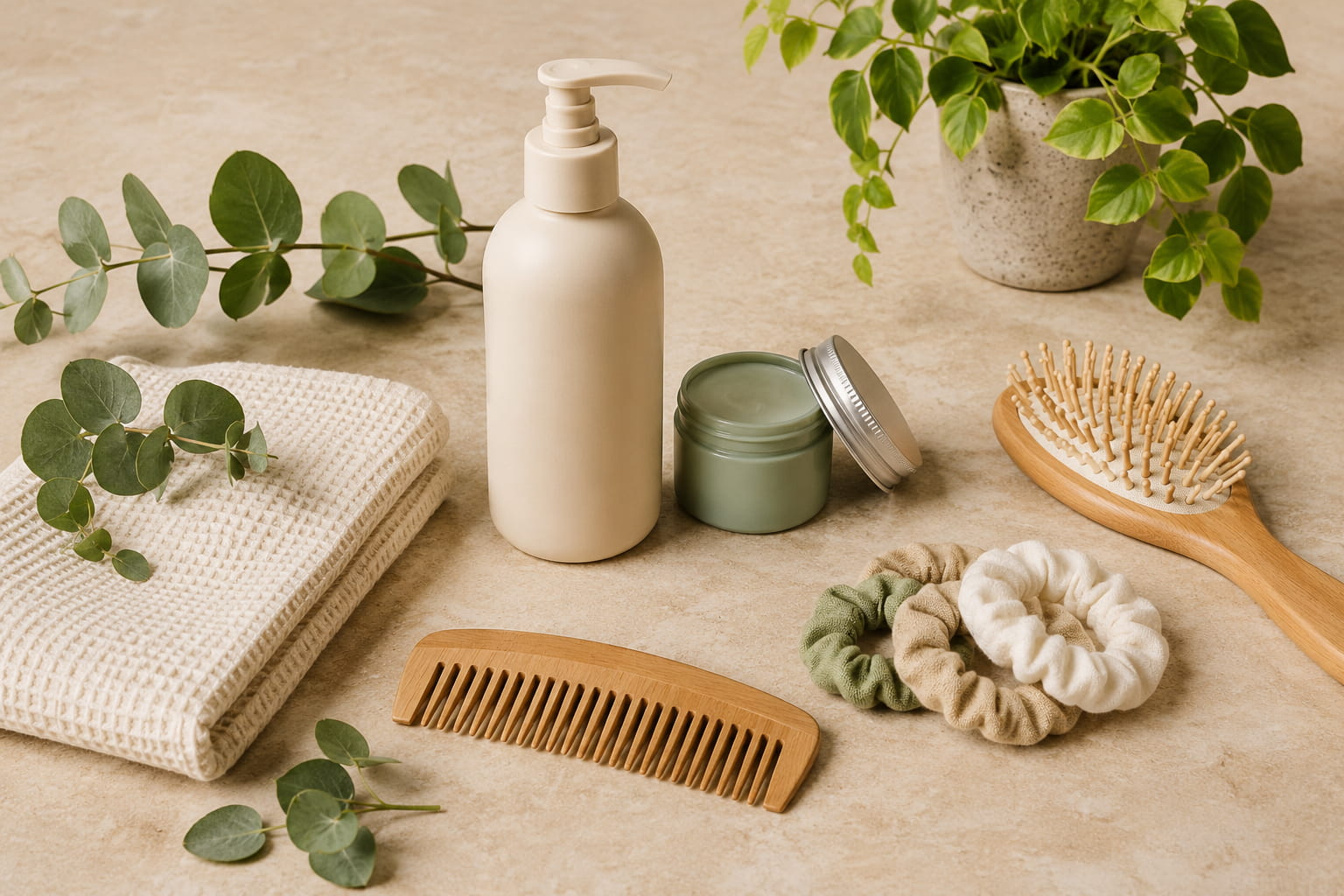
- Selecting durable hair-care tools
- Reducing unnecessary product waste
- Reusing or recycling suitable packaging
- Washing and caring for tools so they last longer
- Avoiding impulse purchases
- Choosing concentrated or refillable products when practical
The goal is consistent, realistic improvement, rather than perfection.
Why Build a More Sustainable Hair Care Routine?
A hair-care routine can involve shampoos, conditioners, styling products, brushes, combs, towels, packaging, and accessories.
When these items are purchased frequently or replaced before they wear out, unnecessary consumption can build up.
A more sustainable routine encourages you to consider the full life of a product.
Buy Less, Use Better
One of the simplest principles of environmentally friendly hair care is buying only what you need.
Instead of collecting multiple products that perform similar functions, consider which ones you regularly use and finish.
This can help reduce:
- Unused products
- Packaging waste
- Impulse purchases
- Unnecessary replacements
- Bathroom clutter
Focus on Product Longevity
A durable brush or comb that remains useful for years can be a better choice than repeatedly replacing inexpensive tools.
The same principle applies to products: use them appropriately, store them properly, and avoid wasting more than necessary.
Key Parts of an Eco-Friendly Hair Care Routine
A sustainable routine is easier to maintain when you break it into several areas instead of trying to change everything at once.
1. Hair-Care Products
Start with the products you use most frequently.
Look for eco-friendly hair care products that fit your actual needs rather than buying something simply because it has sustainable-looking packaging.
Consider:
- How frequently you use it
- How long the product lasts
- Whether the packaging is excessive
- Whether the company provides useful disposal information
- Whether the product works well enough for you to finish it
2. Hair-Care Tools
Brushes, combs, clips, and other accessories are also part of your routine.
Choose durable tools that can withstand regular use and cleaning.
A high-quality tool that lasts longer can help reduce the frequency of replacement.
3. Washing Habits
Your routine also includes how you use water and other resources.
You can make washing more mindful by avoiding unnecessarily long showers and using only the amount of product you need.
Small habits become more meaningful when they are repeated consistently.
Your routine also includes how you use water and other resources. You can make washing more mindful by avoiding unnecessarily long showers and being mindful of water use.
4. Product Storage
Proper storage can help products remain usable for longer.
Keep hair-care products protected from unnecessary moisture, contamination, or heat when the product instructions recommend it.
For reusable tools, allow them to dry properly between uses.
How to Choose Sustainable Hair Care Products
Choosing sustainable hair care products requires looking beyond marketing claims.
A product can have attractive eco-friendly branding while still not being the best fit for your routine.
Look at Packaging
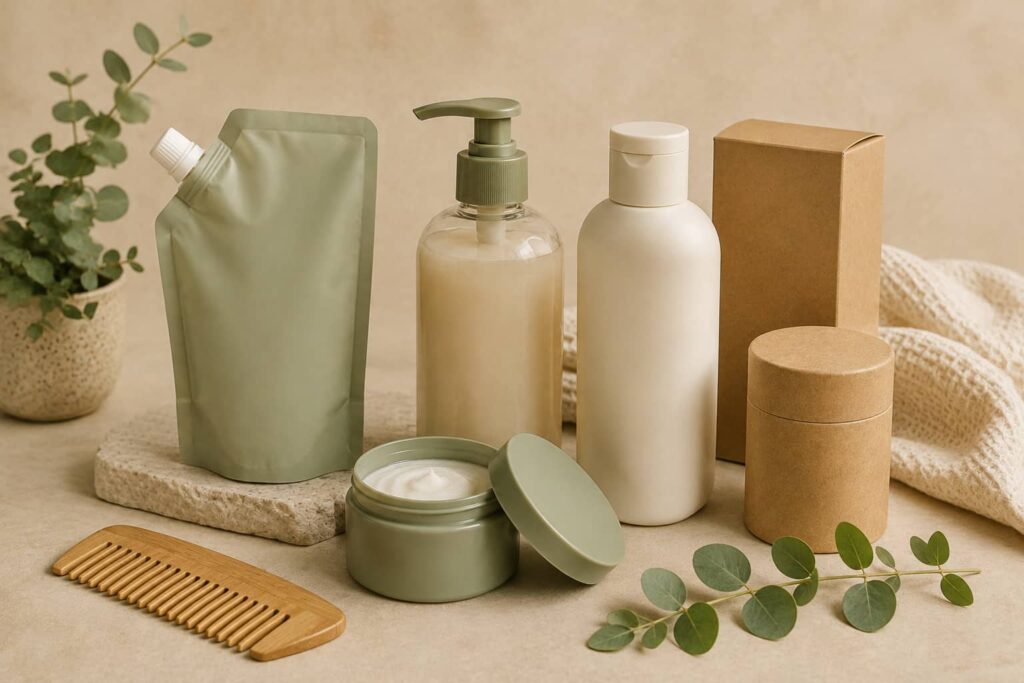
Consider whether the packaging is:
- Minimal
- Recyclable where local facilities accept it
- Refillable
- Reusable
- Made from recycled materials
- Appropriate for the amount of product provided
Do not assume that every “green” package is automatically environmentally superior.
Packaging choices can make a difference, but what is recyclable depends on the material and the recycling facilities available in your area.
Consider How Long It Lasts
Product longevity matters.
A product that lasts significantly longer may reduce the number of containers you purchase over time.
This is one reason concentrated formats can sometimes be worth considering.
Avoid Buying More Than You Need
A sustainable purchase is still unnecessary if the product sits unused.
Before purchasing another item, ask:
Do I need this, or do I already have something that serves the same purpose?
This simple question can make eco-friendly hair care more affordable and less wasteful.
Look for Clear Information
Brands that provide useful information about ingredients, packaging, sourcing, or disposal can make it easier for consumers to understand what they are purchasing.
However, avoid treating one sustainability claim as proof that an entire product or company is environmentally responsible.
When evaluating environmentally friendly hair care, it is also important to consider the ingredients, packaging, and overall environmental impact of the shampoo you choose.
Eco-Friendly Hair Care Habits That Reduce Waste
Products are only one part of environmentally friendly hair care. Your everyday habits matter too.
Use the Right Amount of Product
Using more shampoo, conditioner, or styling product than necessary can make products run out faster.
Follow the product’s directions and adjust the amount according to your actual needs.
Finish Products Before Replacing Them
Try to avoid opening several similar products at once.
Finishing what you already have can reduce waste and help you understand which products genuinely work for your routine.
Reuse Suitable Containers
Depending on the packaging material and its original purpose, some containers may have a second use.
For example, a sturdy container may be useful for organizing small hair accessories.
Only reuse packaging when it is clean, safe, and appropriate for the new purpose.
Take Care of Your Tools
Clean brushes and combs regularly based on their material and construction.
Good maintenance can help prevent premature replacement and keep frequently used accessories in better condition.
Sustainable Hair Care Tools and Accessories
Your hair-care routine does not stop at shampoo and conditioner.
Accessories can also contribute to a more sustainable setup.
Durable Combs and Brushes
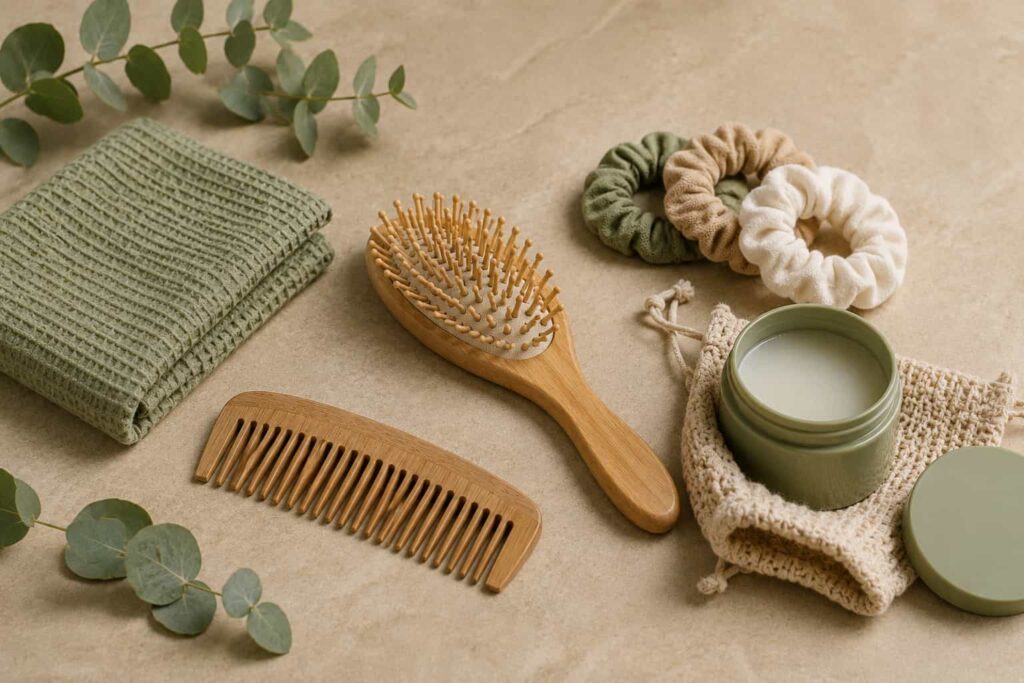
Look for well-made combs and brushes that can withstand regular use.
Natural or renewable materials may be appealing, but durability should remain an important consideration.
Reusable Hair Accessories
Instead of repeatedly buying disposable or low-quality accessories, consider durable alternatives that can be used many times.
Examples include:
- Reusable fabric hair ties
- Durable clips
- Long-lasting combs
- Washable hair wraps
- Reusable microfiber or organic-fiber towels, where appropriate
The best option depends on what you will genuinely use.
Keep a Small, Useful Collection
You do not need a large collection of accessories to have an effective routine.
A few versatile, durable items can be easier to maintain and replace less frequently.
How to Make Your Existing Routine More Eco-Friendly
You do not need to throw away every product you currently own.
In fact, replacing usable products immediately can create unnecessary consumption.
Instead, gradually improve your routine.
Step 1: Take Inventory
Look at everything you currently use.
Separate products into:
- Frequently used
- Occasionally used
- Nearly finished
- Unused
- Duplicate products
Step 2: Finish What You Have
Continue using suitable products rather than discarding them simply because you want a greener routine.
This is one of the easiest ways to avoid unnecessary waste.
Step 3: Replace Strategically
When something actually needs replacing, look for an eco-friendly hair care product that better fits your sustainability goals.
This creates a gradual transition rather than an expensive bathroom overhaul. When it is time to replace a product, you can explore alternatives such as eco-friendly shampoo bars if they suit your hair-care routine.
Step 4: Improve One Habit at a Time
You could begin with packaging, then move toward reusable accessories, and later reconsider how you shop.
Small changes are often easier to maintain than dramatic lifestyle overhauls.
Common Mistakes to Avoid
Even well-intentioned shoppers can make sustainability more complicated than necessary.
Buying Products Only Because They Look “Green”
Earth-toned packaging and words such as “natural” or “clean” do not automatically prove that a product is sustainable.
Look at the overall product instead.
Replacing Everything at Once
Throwing away usable products to immediately purchase alternatives can create unnecessary waste.
Use what you already own first whenever it is safe and suitable.
Choosing Sustainability Over Practicality
If a product does not work for your routine, you may stop using it and eventually purchase another product.
A better approach is finding a sustainable option that also fits your actual needs.
Buying Too Many “Eco” Products
Sustainability is not about having a bathroom full of products with environmental claims.
A smaller, carefully chosen collection can often be more practical.
Ignoring Product Care
Even a durable product can have a shorter useful life if it is poorly maintained.
Cleaning, drying, storing, and using your tools correctly can help you get more value from them.
How to Create a Simple Eco-Friendly Hair Care Routine
If you want to start today, keep the process simple.
Your Basic Routine
1. Use what you already own.
Avoid unnecessary replacements.
2. Reduce product waste.
Use appropriate amounts and finish products before opening replacements.
3. Choose durable tools.
Invest in items you expect to use for a long time.
4. Pay attention to packaging.
When replacing products, consider lower-waste or refillable options where practical.
5. Maintain your accessories.
Clean and store brushes, combs, and reusable items properly.
6. Shop with a list.
Know what you need before browsing new products.
7. Make changes gradually.
A sustainable routine should be realistic enough to maintain.
This approach makes eco-friendly hair care less about shopping and more about changing everyday habits.
Frequently Asked Questions
Eco-friendly hair care focuses on reducing unnecessary waste and making more thoughtful choices about products, packaging, tools, and everyday hair-care habits.
Not necessarily. Sustainability depends on factors such as packaging, durability, product use, transportation, disposal, and the length of time you use the product.
Start by using the products you already own, finishing them before buying replacements, reducing product waste, and taking better care of your existing tools.
Sustainable hair care products are products designed or marketed with considerations such as reduced packaging, refillability, reusable formats, durable materials, or other environmental attributes. Always evaluate the specific product rather than relying on a single claim.
It does not have to be. Buying fewer products, finishing what you own, choosing durable accessories, and avoiding unnecessary purchases can actually help control spending.
Conclusion
Creating a more sustainable hair routine does not require a complete lifestyle change.
The most effective approach is to look at your existing habits and make practical improvements over time. Use products efficiently, avoid unnecessary purchases, care for your tools, and consider packaging and durability when something genuinely needs replacing.
The best eco-friendly hair care routine is one that is realistic enough to follow consistently.
Start with one simple change today—then build from there.
Ready to make your routine greener? Review your current hair-care products and choose one practical swap the next time you need a replacement.